Costs
Part of Reading travel mobility equipment with a sceptical eye
Travel mobility equipment under review: the good, the weak and the verdict
A working review of travel mobility equipment names the models worth buying, the scooters and wheelchairs to avoid, and how to judge a device before you pay.
What to take away
- The good travel mobility equipment picks are the ones you can lift, fold and charge alone: the Sunrise Medical Quickie QXi, the Pride Mobility Go-Go Elite Traveller and the Drive Medical Fly Lite.
- The weak ones are budget folding power chairs with fixed seating, steel transport chairs under $150, and three-wheel scooters with a narrow track.
- A transport chair is a passenger seat, not a mobility device. It only works if someone is with you every hour of the trip.
- Rent a scooter for a short trip; buy when you sit in the device all day or travel more than three times a year.
- Keep itemized receipts. Some equipment and related travel costs may count as medical expenses under IRS rules.
Travel mobility equipment repays a short list. A few models lift, fold and charge without help. Cheaper lookalikes do not, and the gap shows up in seating and in battery paperwork.
The good options, named: Quickie, Go-Go and Fly Lite
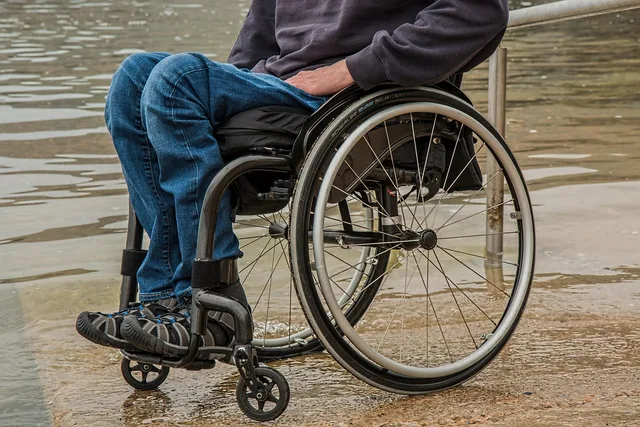
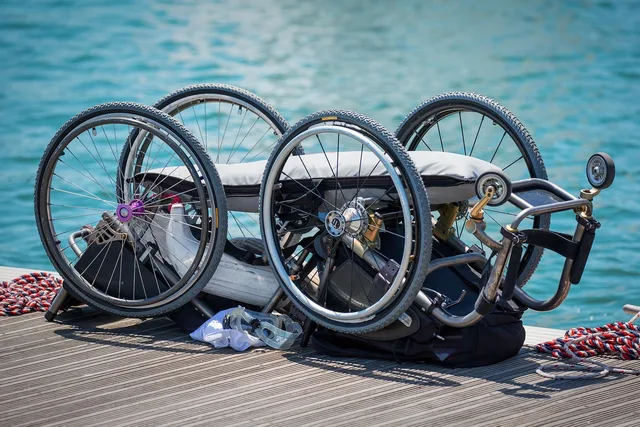
Sunrise Medical Quickie QXi. A rigid or folding ultralight manual chair, roughly 20 to 26 pounds depending on configuration. It suits someone who transfers independently and flies often, because the frame folds into a trunk without tools. Dealers price it, and a clinical assessment sets seat width and depth.
Pride Mobility Go-Go Elite Traveller. A three or four wheel travel scooter that breaks into four or five pieces, the heaviest around 35 pounds. It suits a traveler who needs range at a destination and can lift the pieces into a car. Dealers and online sellers stock it, and battery type drives the price.
Drive Medical Fly Lite. A folding transport chair, around 19 pounds, under $200 at most retailers. It suits a companion-assisted trip where the user walks short distances. It is the weakest of the three for independence, and the honest verdict is that it is a seat with wheels.
Alber Scalamobil. A stair-climbing attachment for manual chairs, dealer-fitted. It suits older European hotels and any US property where the accessible entrance is not the one you arrive at. Priced by quote, not list.
TGA Mobility Minimo. A folding, lithium-powered scooter around 40 pounds with the battery removed. It suits a traveler who wants power without a van lift. Sold through dealers.
Which spares are worth their weight decides how much of the trip budget goes to batteries and chargers.
The weak options, named
Drive Medical ZooMe Auto-Flex, Forcemech and marketplace house brands. Folding power chairs in this group typically ship with fixed seat depth and no adjustable back angle, and a battery that is often not airline-approved. Verdict: fine as a second device for flat, short errands, wrong as your main chair.
Medline and Nova Medical steel transport chairs under $150. Heavy, no adjustable armrests, small rear wheels that catch on thresholds. They push badly on carpet and worse on gravel. Verdict: buy one as a spare, not as the trip's main seat.
Three-wheel scooters such as the Drive Medical Scout 3 and Shoprider models. A single front wheel and a narrow track tip on camber and on curb cuts. Four wheels cost more and are the safer buy for outdoor travel.
Any device whose battery lacks a printed watt-hour rating. Airlines check the rating, not the marketing claim. Federal aviation rules from the FAA and TSA, and most carriers, cap lithium batteries at 100 watt-hours, and 160 with airline approval. Without the number, the chair may not board.
Extended warranties that exclude motors, batteries and seating. Read the exclusion list before the price. The parts that break are usually the parts excluded.
The verdict: every device in the weak list fails on the feature a traveler leans on hardest, so none of them is worth building a trip around. If you want one name from the good list, the Pride Mobility Go-Go Elite Traveller covers a destination for most scooter users, and the Sunrise Medical Quickie QXi is the chair to fly with. Otherwise rent a four-wheel scooter for the week and buy an adjustable chair when the seating is prescribed.
What the device itself costs
The price of a device moves with seat width and weight capacity more than with any other feature. A Drive Medical Fly Lite transport chair runs under $200 at most retailers, and the steel transport chairs in the weak list sit under $150. Anything prescribed after a clinical assessment is priced above the same model bought from a marketplace listing, not inside it.
Device marketplace price bands
- Transport chair$100 to $170
- Lightweight manual chair$120 to $525
- Folding power chair$370 to $800
- Prescribed power chair$2,000 to $6,000
- Travel scooter$600 to $2,500
- Portable ramp$64 to $190
- Pressure relief cushion$50 to $400
The purchase price is roughly half the three-year cost. Fitting, cushions, batteries and annual service make up the rest.
Renting against owning
Rent when the trip is short, the device is a scooter, the destination has a supplier, or you are testing a category before buying. Own when you sit in the device all day, when the seating is prescribed, or when travel is frequent enough that rental adds up.
Rent or own decision
Is the trip short, a scooter, or a test?
Rent, but confirm exact model
Own if seated all day or prescribed
Scootaround and Special Needs Group deliver scooters to hotels and cruise terminals, and both rent by the day or the week.
Ask for the exact model and seat width in writing, and photograph what arrives before you sign. Rental stock and its price both move with the season.
Run the numbers over three years, not one. A rental that looks cheap for a week is expensive by the fourth trip.
Getting the device to the destination
Driving with the device is often cheaper than flying with it, and safer for the device besides. Fuel, tolls and an extra night on the road usually decide which one wins, and the federal mileage benchmark below is where to check your own per-mile cost.
Drive versus fly with device
Drive
- Cost basis
- Per mile figure
- Device risk
- Lower damage risk
- Benchmark
- GSA mileage rate
Fly
- Cost basis
- Air fare plus fees
- Device risk
- Airline damage risk
- Benchmark
- Discounted air fares
The General Services Administration's transportation rates page covers privately owned vehicle mileage reimbursement, the discounted air fare program for federal travelers and rail fares in the Northeast Corridor. That mileage figure is a fair outside benchmark for what your own driving costs per mile.
The tax records question
Some medical equipment and related travel is recorded differently for tax purposes, and the categories are narrower than people expect.
IRS Publication 502, Medical and Dental Expenses, lists what may count as a medical expense. Entries cover wheelchairs, artificial limbs, Braille materials, ambulance service and transportation for medical care. A separate list covers what is not includible.
Keep itemized receipts either way, and take the decision to a tax professional, not a supplier.
Where the money is well spent
Fitting and training. A cushion matched to the hours you sit. A second battery if the range is marginal. Insurance that covers damage in transit rather than only theft at home.
Where it is not: features you will not use, a lighter frame that fits worse, and an extended warranty that excludes the parts that break.
The equipment categories explain which lines dominate for each type, and tour pricing shows how an operator folds equipment rental into a package price.
Common questions
How much should I budget for repairs on a two-week trip?
Enough for a call-out and a common part. A few hundred dollars covers most cases. Carry the manufacturer's parts list and a dealer phone number for the destination.
Does travel insurance cover a wheelchair?
Sometimes, with a low limit. Read the equipment schedule rather than the summary page. Ask whether damage in transit is covered separately from theft.
Is a cheap folding power chair a false economy?
Frequently, if the seating is wrong. It is fine as an occasional second device for flat ground. As a main chair, the fixed seat depth is the problem.
Who pays if an airline damages my chair?
Report it before leaving the airport and follow the airline's process in writing. Photographs taken at the gate are what settle it. Under the Air Carrier Access Act and 14 CFR Part 382, airlines must repair or replace a wheelchair they damage, and the DOT's Office of Aviation Consumer Protection handles disputes that stall.