Reviews
Part of What to know before a wheelchair accessible trip: chair measurements, transfers and repair plans
Driving versus flying: which suits a wheelchair accessible trip
Wheelchair accessible trips comparison: driving keeps your chair with you the whole way. Flying is faster and hands your equipment to somebody else.
What to take away
- The central trade is control against speed. Driving keeps the chair with you; flying does not.
- Rail sits between the two and depends heavily on the specific stations.
- Whatever you choose, know how your equipment is funded and insured before it travels.
- Choose the mode that protects the chair, because a damaged chair ends the trip regardless of the schedule.
Every wheelchair trip comes down to one question early on: how does the chair get there, and who has it in between.
Driving your own vehicle
For. The chair stays with you throughout. No handling by anybody else, no gate checking, no separation. You control the timing, the stops and the temperature.
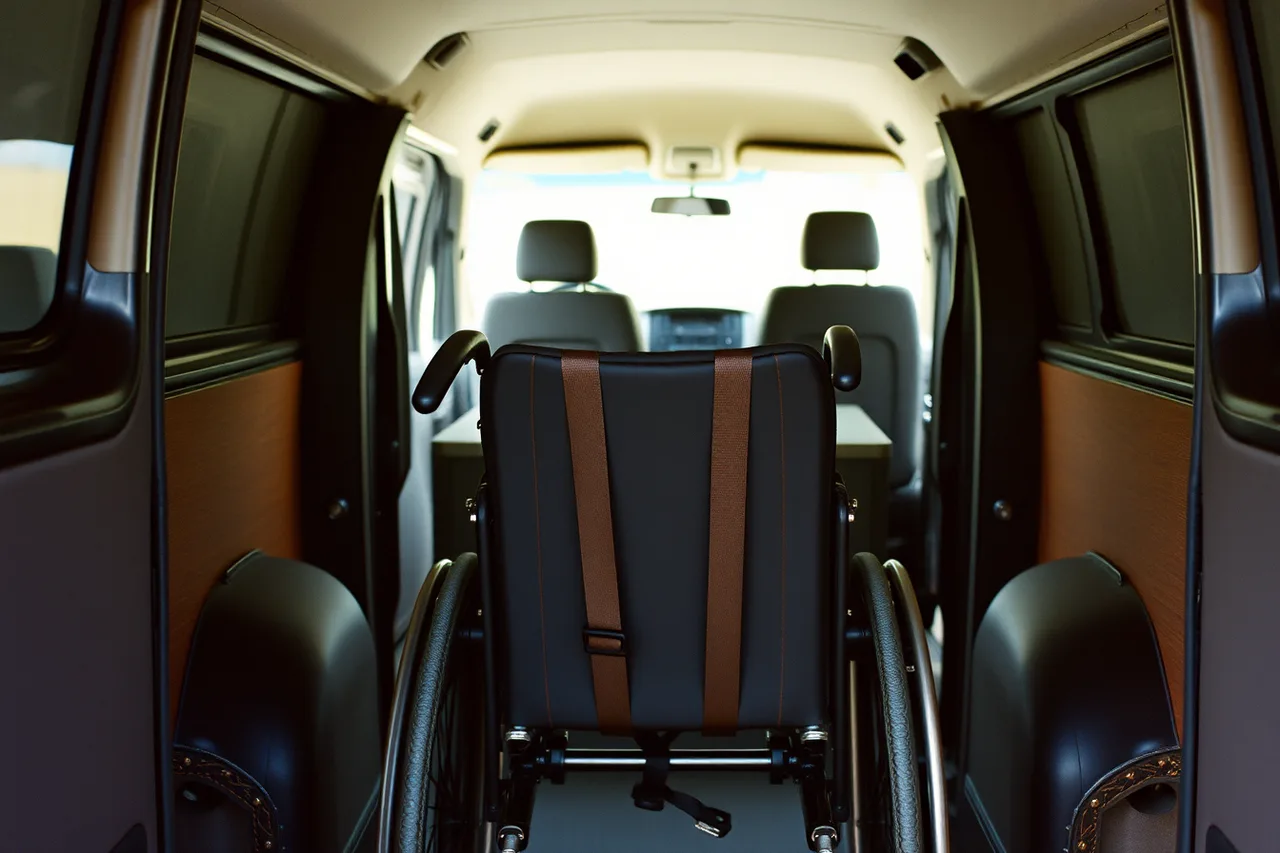
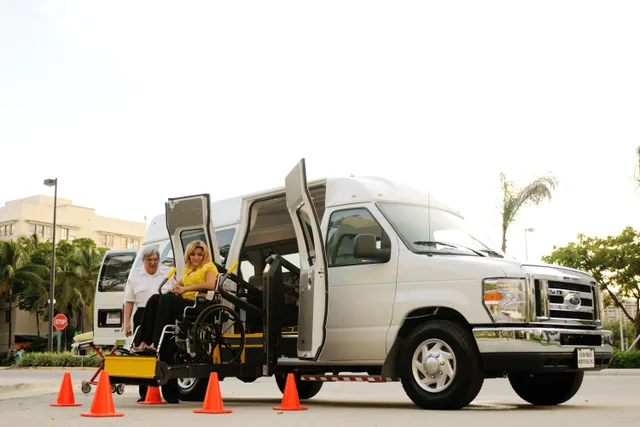
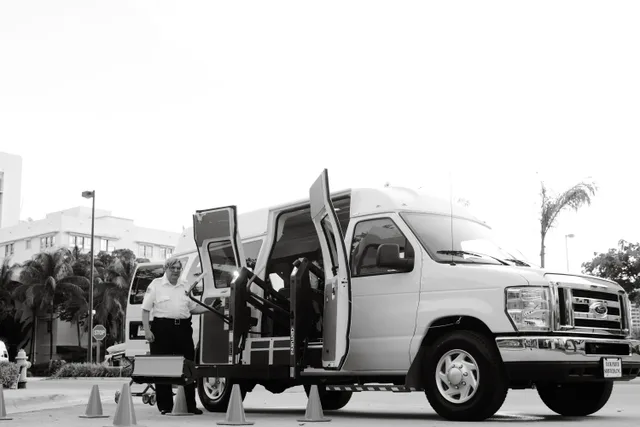
Against. Distance, driver fatigue, and the cost and availability of an adapted vehicle if you do not own one. Wheelchair Getaways rents wheelchair accessible vans nationwide, typically for $100 to $150 per day. Wheelers Accessible Van Rentals charges typically $99 to $199 per day.
MobilityWorks and AMS Vans also rent accessible vehicles through their dealer networks. For standard rentals, Enterprise offers hand controls at no extra charge at many locations with 48 hours notice. Hertz provides adaptive driving equipment, including hand controls and spinner knobs, with 24 to 48 hours notice.
For most domestic trips within a day's drive, this is the lowest-risk option by a wide margin.
Flying
For. Speed and reach. A coast-to-coast trip is a morning rather than three days.
Against. Your chair is handled by other people, stored in a hold, and returned to you at the other end. Damage happens, and it is the single largest anxiety in wheelchair travel for good reason.
Delta Air Lines, American Airlines, United Airlines, Southwest Airlines and JetBlue all carry wheelchairs. Delta's Fly Delta app includes wheelchair tracking, so you can see when your chair is loaded. Southwest returns checked wheelchairs at the gate and does not charge for them. American and JetBlue require 48 hours notice for wheelchairs with lithium batteries.
At the airport, Hartsfield-Jackson Atlanta (ATL) has an accessible Plane Train between concourses. Denver International (DEN) has an accessible underground train. Chicago O'Hare (ORD) has an accessible Airport Transit System.
If you fly: photograph the chair before it leaves you, from four angles with the date visible, remove and carry loose parts, label everything, keep the spec card handy, and know the manufacturer's service contact at the destination.
Rail
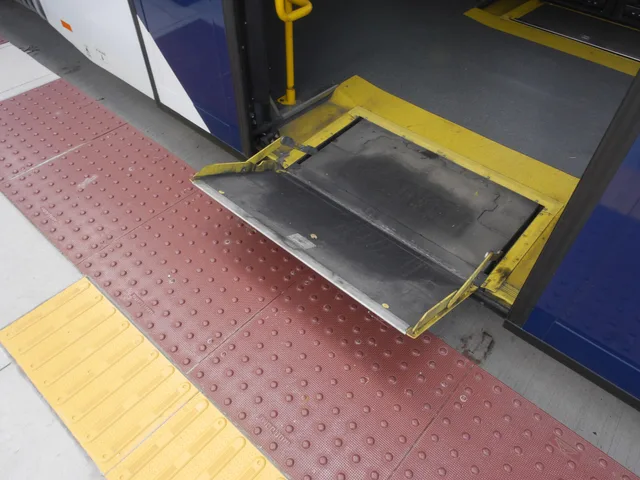
For. Level or ramped boarding at many stations, room to stay in your own chair, no separation from equipment.
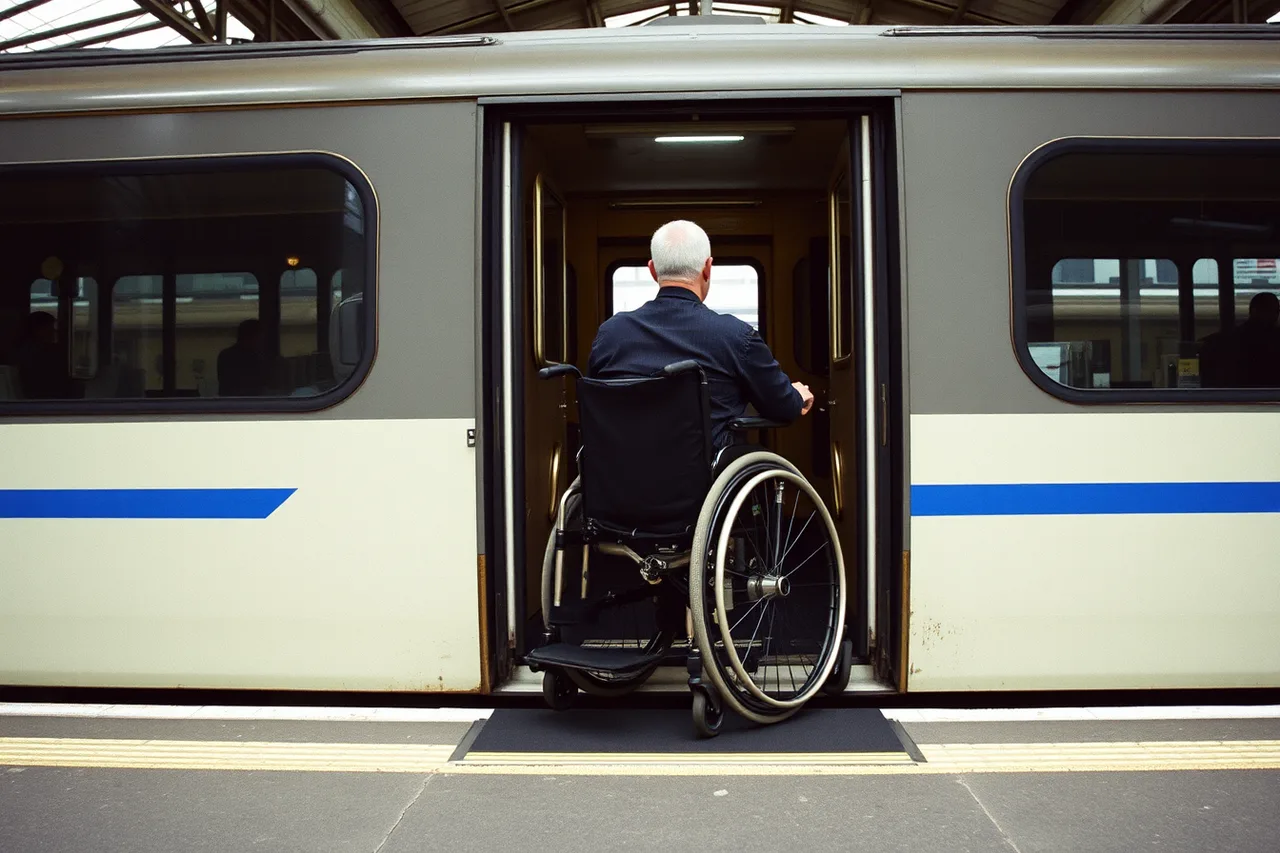
Against. Station-by-station variation. A line can be accessible and a particular platform not.
Amtrak offers a 10% discount for passengers with disabilities on most fares. It recommends 24 hours notice for wheelchair space. Washington Union Station, New York Penn Station and Chicago Union Station have level boarding on many routes, but check the specific platform.
Check the specific stations at both ends and any change point, rather than the operator's general statement.
Transit and paratransit at the destination
Fixed-route buses and trains are frequently the better option where they exist, since they run to a timetable and do not need booking. Demand-responsive services need advance arrangement and are less flexible.
Washington Metro has elevators at all stations and runs MetroAccess paratransit. Chicago's CTA buses all have ramps, and most rail stations are accessible. New York's MTA lists its accessible subway stations and runs Access-A-Ride paratransit. Los Angeles Metro has accessible buses and rail, with Access Services for paratransit.
Check whether the specific stations on your route have working lifts. That is the failure point, not the vehicles. Where one line connects everything you want, that single line can carry a whole weekend.
The equipment question underneath all of it
Whatever you choose, know how your chair is funded, insured and replaced, because that determines what happens if it is damaged in transit.
Medicare's explanation of coverage for wheelchairs and scooters sets out how such equipment is treated as durable medical equipment, the conditions attached and what a supplier has to be. For veterans, the Veterans Affairs health benefits pages describe the health care benefits under which equipment may be provided.
Neither is travel insurance, and both matter when you are trying to establish what a replacement or repair involves away from home. Find out before you travel rather than from an airport office at midnight.
Choosing
| Priority | Choose |
|---|---|
| Protecting the chair | Drive your own adapted vehicle, or rent from Wheelchair Getaways |
| Distance and time | Fly, with preparation; Delta's app tracks your chair |
| Comfort over medium distance | Amtrak, with station checks |
| Flexibility at the destination | Own vehicle or fixed-route transit like Washington Metro |
| Lowest total risk | Drive, then fixed-route transit locally |
The documentation that makes any of these easier is in the practical planning steps, and what it all costs frequently decides the mode as much as the distance does.