Rules
Part of Reading travel mobility equipment with a sceptical eye
Keeping a travel mobility device working for the whole trip
Five ways to move a travel mobility device to your destination, each with its real cost, its failure mode, and the battery check that keeps it working.
What to take away
- Five named services keep a travel mobility device working for the whole trip: airline carriage, a wheelchair-accessible van from BraunAbility, MobilityWorks or Wheelers, LTL freight on a pallet, a weekly rental from Scootaround, Cloud of Goods or Special Needs Group, and a loaner from a Move United program.
- Each has a published cost you can price before booking, and a failure mode that shows up on arrival rather than at the counter.
- Lithium limits come from the FAA, not from a forum300 watt hours per pack, or 160 watt hours each on a two-battery device. They decide whether shipping is open to you.
- TSA Cares screening help needs 72 hours of notice and does not exempt anyone from screening.
- A device that fails mid-trip is a parts question. Line up a repairer who stocks your brand before you leave.
Five ways to move the device, by name
The transport choice is not about the traveler. It is about the frame, the battery and the schedule. Costs below are typical US figures for 2026, so confirm the current number before you book.
1. Fly with it. Airline carriage is the cheapest option and the one with the most handoffs. Under the Air Carrier Access Act, US carriers must carry your device as checked baggage, so the chair adds $0 to the ticket. The DOT damage-claim process is how you recover if they break it.
Photograph the frame and label the battery before handover, as set out in what to pack for travel mobility equipment. Tell the airline your watt-hour rating when you book, and ask for the device back at the gate rather than at the carousel.
Five ways to move a device
Fly
- Speed
- fastest
- Risk
- highest
- Cost
- cheapest
- Best for
- short trips
Drive
- Speed
- slowest
- Risk
- lowest
- Cost
- fuel and time
- Best for
- any device
Ship
- Speed
- slow
- Risk
- battery limits
- Cost
- shipping fees
- Best for
- rigid frames
Rent
- Speed
- fast
- Risk
- fit risk
- Cost
- rental fee
- Best for
- scooters
Borrow
- Speed
- same day
- Risk
- availability
- Cost
- free or nearly
- Best for
- day use
2. Drive with it. A wheelchair-accessible van rental runs through BraunAbility dealers, MobilityWorks and Wheelers Accessible Van Rentals. Expect roughly $150 to $300 a day in most US markets, a mileage cap near 100 to 150 miles a day, and $0.35 to $0.50 a mile after that. A one-way return typically adds $300 to $700.
The device rides behind you, so nothing is out of sight. Carry the charger up front and write down one repair shop for each stop.
3. Ship it ahead. For a rigid manual frame, freight is a pallet, a liftgate and a delivery window. An LTL pallet shipment typically runs $250 to $700 across the US, liftgate service around $75 to $150, and residential delivery extra. Ask the carrier for the class before you quote.
Battery equipment needs a carrier that accepts hazardous goods, which most parcel networks will not. UPS and FedEx ground bookings for lithium packs go through a hazmat account, not a walk-up counter. Ship to arrive a day before you do, addressed to the hotel with your arrival date.
4. Rent at the destination. Scooter and power chair rental is a real market: Scootaround, Cloud of Goods and Special Needs Group all deliver to hotels and cruise terminals. Rates are weekly rather than daily, typically $150 to $350 a week with delivery included, and $30 to $60 a day where a daily rate exists.
The fit is the risk. Measure your seat-to-floor height at home and compare it to the spec sheet. Ask at delivery for a spare charger and the local service number.
5. Borrow through a program. Adaptive sports programs and some park concessions lend equipment for the day. Move United member organizations and many National Park Service visitor centers can point you to a loaner. Cost is free, or a deposit of about $0 to $50 that comes back with the equipment. The trade is availability, so ask two weeks ahead.
Batteries decide which of the five are open
Lithium cells narrow the list fast, and the limits are published rather than negotiable.
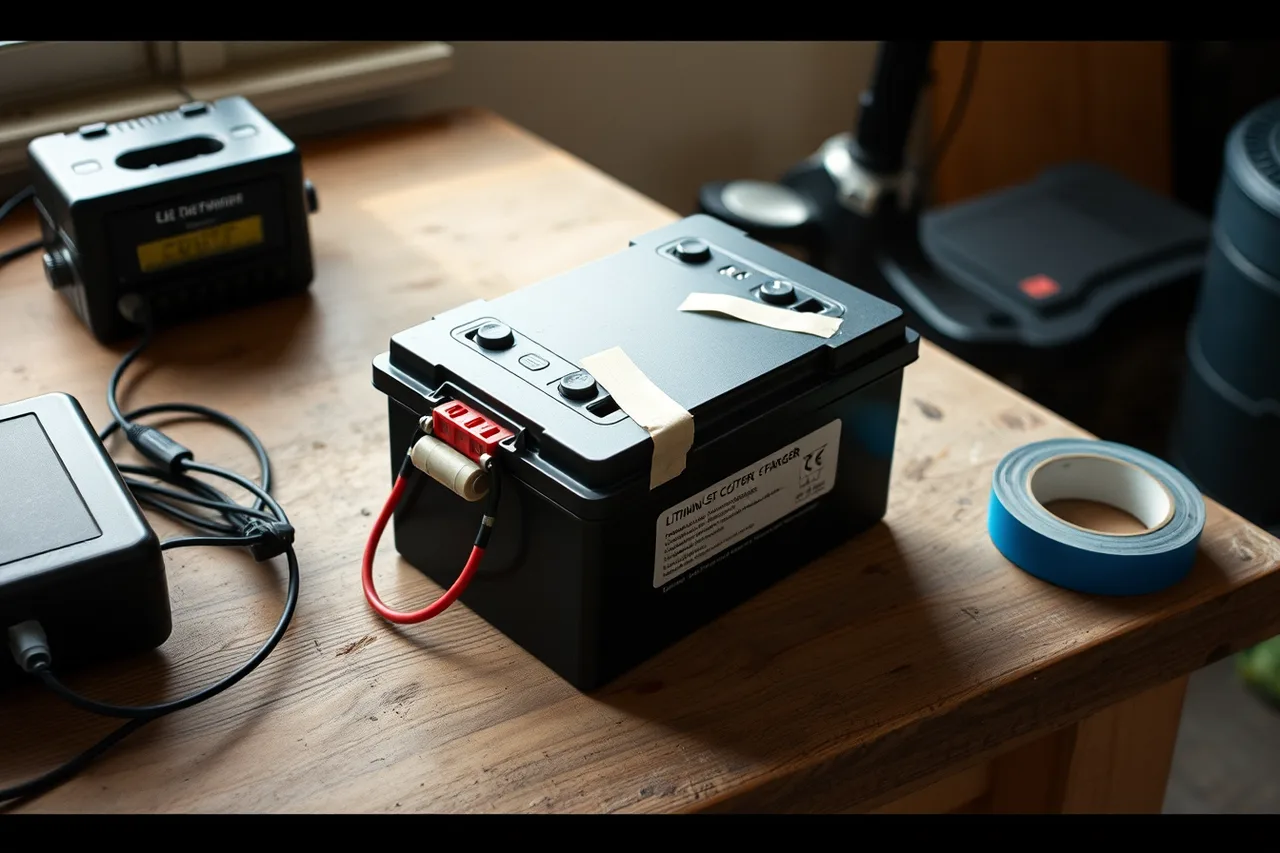
The FAA's PackSafe entry for lithium batteries covers lithium ion and lithium metal cells, the quantity limits, and the requirement that terminals be protected against short circuit.
Wheelchairs and mobility devices sit under their own entry, not the laptop one. Lithium ion packs are capped at 300 watt hours each, or 160 watt hours each when the device carries two. Read the mobility text, then check the watt-hour rating printed on your own pack.
Tell the airline in advance, keep the pack in the cabin where the crew can see it, and carry any removed battery in a protected case. A pack over the limit is what ends a freight booking.
Charging away from home
- Confirm socket type and voltage before bookingType C and F in most of Europe at 230 V, Type G in the UK and Ireland, Type A and B in the US and Canada at 120 V, Type I in Australia and China
- Ask where the socket sits relative to the bed, because charger cables are short
- Carry the original charger in the cabin, plus a spare cable
- Plan a midday charge if the range is marginal
- Ask whether the hotel will store and charge the device overnight in a secure area
Older buildings may still have ungrounded two-pin sockets, so pack a universal adapter. Most mobility chargers are single voltage, and a 300 W to 500 W step-up transformer typically costs $40 to $150.
Two shorter charges beat one long one when the day's schedule is uncertain.
Screening help, which is bookable
TSA's passenger assistance program explains how travelers with a disability or medical condition arrange help in advance through its contact line and online form. The published guidance is to request support at least 72 hours before departure, and the TSA Cares line is (855) 787-2227.
It does not exempt anyone from screening. Book it for unusual equipment, and for anyone who needs help through the line.
Repair and recovery on the road
Decide in advance what a breakdown means. A manual chair with a cracked castor is a taxi and an hour. A power chair with a controller fault can end the trip unless a loaner exists. A repairer who stocks parts for your brand is the difference between those outcomes.
Numotion and National Seating & Mobility run service networks in most states and work on Pride Mobility, Permobil, Quantum Rehab and Sunrise Medical equipment. Typical parts prices run $40 to $120 for a caster and fork, $250 to $700 for a joystick module, and $150 to $400 for a fitted pair of batteries.
Write two lines before departure: what I do if it breaks, and who I call first.
What each option actually costs
Named provider
- Fly
- Your airline
- Drive
- BraunAbility, MobilityWorks, Wheelers
- Ship
- LTL freight carrier with a hazmat account
- Rent
- Scootaround, Cloud of Goods, Special Needs Group
- Borrow
- Move United, park concessions
Typical cost
- Fly
- $0 for the device under the ACAA
- Drive
- $150 to $300 a day, $0.35 to $0.50 a mile over the cap, $300 to $700 to drop one way
- Ship
- $250 to $700 a pallet, $75 to $150 for a liftgate
- Rent
- $150 to $350 a week, delivery included
- Borrow
- Free, or a $0 to $50 refundable deposit
Failure mode
- Fly
- Damage found after arrival
- Drive
- One-way returns cost more
- Ship
- Carrier refuses the battery
- Rent
- Seat height does not fit
- Borrow
- Nothing available that day
Where a figure matters, get the current number from the provider, because rates move by season and city.
Choosing per trip
Match the option to the risk you can absorb. The equipment categories show which devices survive the hold, and access details worth confirming cover the destination end of the same question.
Common questions
Is shipping a wheelchair ahead realistic?
For manual frames, yes, at roughly $250 to $700 a pallet. For anything with a battery, ask the carrier first and expect a refusal unless it holds a hazardous goods account.
Can I take a rented scooter home on a plane?
Only with the rental company's written agreement and the battery documentation. Most rentals are one-way, so the return is a separate booking.
What if the hotel has no accessible charging point?
Ask for a room near a communal socket, or bring a heavy duty extension lead rated for the load. Confirm the circuit before you plug in.
Do adaptive programs lend equipment to visitors?
Many do, for the day and often free. Move United member organizations and park concessions are the two places to ask, two weeks ahead rather than on arrival.