Guides
Chicago and Denver as bases for accessible Midwest and mountain trips
Accessible road trips from Chicago and Denver: lakefront trails, ADA transit, adaptive sports and mountain gateway routes with altitude tips.
What to take away
- Chicago and Denver both work as accessible road trips bases because each pairs flat, well-maintained core routes with a transit and highway network that reaches a different kind of scenery.
- Chicago's lakefront trail, museum campus and CTA rail system give you car-free days; the city is the Midwest hub for drives into Michigan, Wisconsin and Indiana.
- Denver sits at the foot of the Front Range, so mountain gateway routes start within an hour of downtown, and the city has one of the country's deepest adaptive sports scenes.
- Sidewalk and transit stop design in both cities follows the U.S. Access Board's PROWAG guidelines, which set the dimensions to check before you commit to a route.
- Altitude is the Denver variabledowntown sits about a mile high, and mountain destinations climb well above that, so plan the first two days easy.
- Winter closes some mountain roads and trails to everyone; summer afternoons bring thunderstorms above treeline.
Why Chicago works as an accessible base for Midwest trips
Chicago earns its place as a base for two reasons: you can travel the city without a car, and you can leave the city by car on flat, predictable highways.
The lakefront is the anchor. An 18-mile trail runs from the South Side to the northern edge, mostly separated from street traffic, with underpasses at the major crossings. The downtown stretch through Grant Park and the Museum Campus is wide, paved and level, which makes it the easiest long roll in the city.
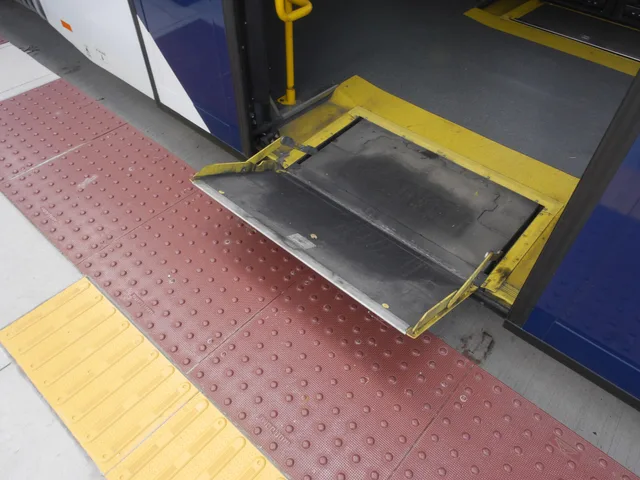
Transit does the rest. All CTA 'L' stations are step-free or have elevator access, and every bus is equipped with a ramp and securement area. That matters when you are deciding whether to ride or drive.
The rules those vehicles follow come from the Access Board's ADAAG for Transportation Vehicles, which covers lifts, ramps, securement and priority seating on buses and rail cars.
Outside the city, Interstate 90, 94 and 55 run flat across Illinois, Indiana and southern Michigan. If you would rather not fly with a power chair, Driving versus flying is the trade-off worth settling before you book anything.
What the Midwest radius looks like
| Direction | Drive time from the Loop | What is there |
|---|---|---|
| North | About 1.5 hours | Milwaukee lakefront and the Wisconsin Dells |
| East | About 1 hour | Indiana Dunes National Park |
| West | About 2.5 hours | Starved Rock State Park and the Illinois River valley |
| South | About 2 hours | Champaign and the flat central Illinois farmland |
Chicago lakefront, transit access and the routes that hold up
Chicago lakefront accessibility is the strongest single argument for basing a Midwest trip here. The path is continuous, the grade is gentle, and accessible restrooms sit at regular intervals in the harbors and park fieldhouses.
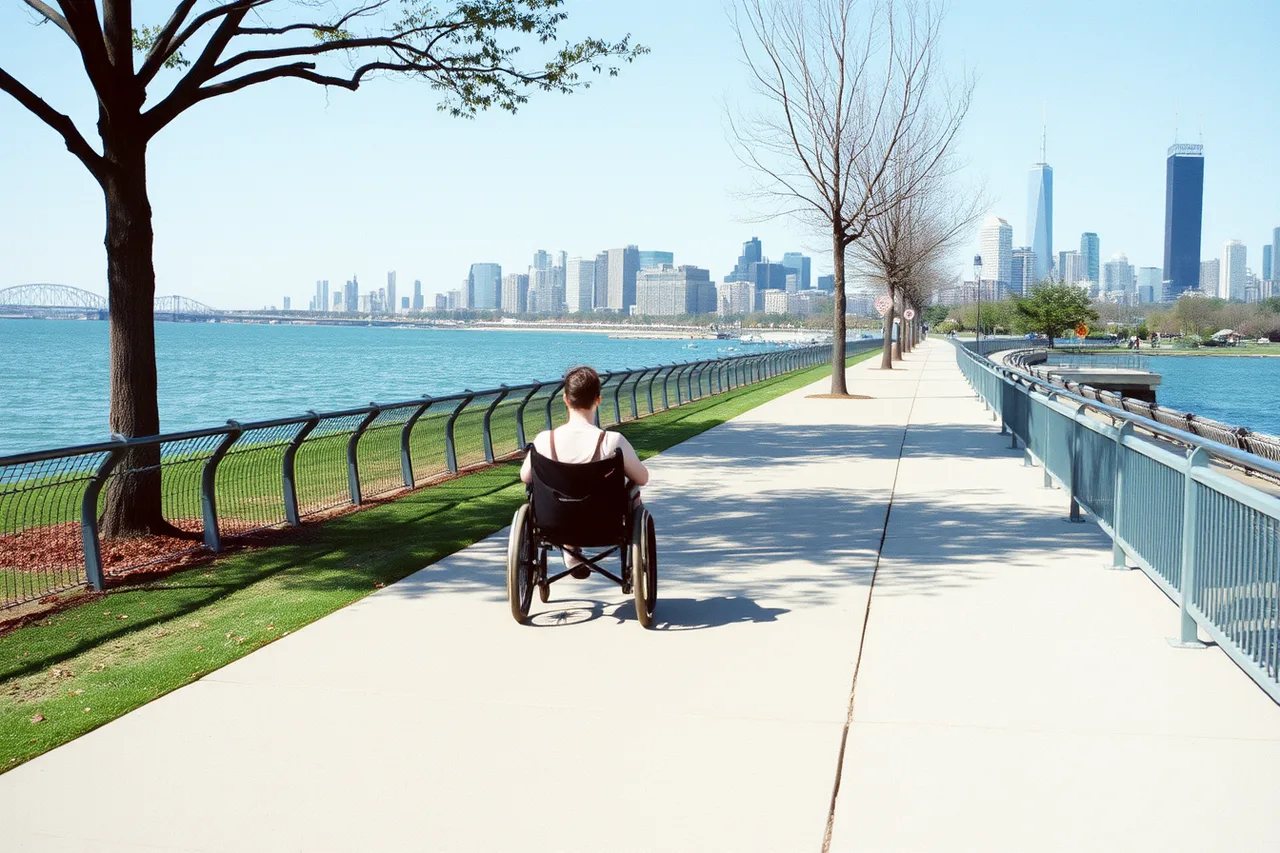
Start with the Museum Campus. The Field Museum, Shedd Aquarium and Adler Planetarium all have step-free entries, accessible restrooms and loaner wheelchairs. The pedestrian bridge from the 18th Street area to the campus is long but level.
Sidewalk quality varies by neighborhood, not by city. The U.S. Access Board's About PROWAG sets the public right-of-way guidelines for sidewalks, curb ramps and transit stops, including clear width and cross-slope limits. When a route feels rough, that is usually a curb ramp or a cross-slope problem, not the trail itself.
Four routes hold up trip after trip.
Chicago accessible routes
- Lakefront Trail Oak Street to Hollywood
- Museum Campus loop level pavement
- Chicago Riverwalk ramps at street crossings
- Lincoln Park Zoo free step-free paths
- Navy Pier wide corridors accessible restrooms
- The 606 trail paved gently graded
- Lakefront Trail, Grant Park to North Avenue Beachabout 3 miles of asphalt and concrete, flat, separated from street traffic, with wide pavement at the harbors.
- The 606, also called the Bloomingdale Trailabout 2.7 miles of concrete and asphalt on a former rail viaduct, gentle grades, with ramped entries at the cross streets.
- Chicago Riverwalkabout 1.25 miles of level concrete between Lake Shore Drive and Franklin Street, with ramps down from street level.
- Lakefront Trail, Museum Campus south to 31st Streetroughly 2 miles of flat pavement, quieter than the downtown stretch, with a harbor restroom at the south end.
For overnight stops, two downtown properties publish accessible room types: the Palmer House and the Embassy Suites Chicago Downtown Magnificent Mile. Ask which rooms have a roll-in shower rather than a tub with grab bars. Compare what you get before you commit, the way budget motels along a longer road trip lays out.
Why Denver works as a gateway to accessible mountain trips
Denver works as a base because the mountains start at the city limits. Interstate 70 heads west into the Front Range within 20 minutes of downtown, and the metro area's transit and trail network is flat enough for a full day out.
Denver pre-trip checks
- Lodging has roll-in shower not tub
- Mountain town above 8,000 feet plan
- Road closes seasonally check status
- Trailhead has accessible restroom
The city itself sits at 5,280 feet, give or take. That is the number to remember. Visitors from sea level often feel it on the first afternoon, and a wheelchair user working harder to push at altitude will notice it sooner.
Denver's rail system, including the A Line to the airport, is step-free at every station, and the buses follow the same vehicle rules as Chicago's. Regional buses run to Boulder and the foothills, which lets you test a mountain day without driving.
For downtown lodging, the Grand Hyatt Denver and the Embassy Suites Denver Downtown Convention Center both publish accessible room types. Ask which rooms have a roll-in shower rather than a tub with grab bars, and check the walk to the 16th Street MallRide, which loads at street level.
What to check before you leave the metro
- Whether your lodging has a roll-in shower, not just a grab bar tub
- Whether the mountain town sits above 8,000 feet, and how you will handle the first night
- Whether the road you plan to drive closes seasonally
- Whether the trailhead has an accessible restroom, which many alpine trailheads do not
Denver adaptive sports programs and what they offer visitors
Denver adaptive sports programs are the reason many travelers treat the city as more than a stopover. Two of them work with visiting athletes: the National Sports Center for the Disabled, known as NSCD, and Adaptive Adventures.
Five-day Denver adaptive trip
- Day 1City and altitude acclimation
- Day 2Handcycle session on paved trail
- Day 3Guided adaptive paddle
- Day 4Mountain drive with overnight
- Day 5Accessible lodging mountain town
NSCD runs year-round programs from Denver and at Winter Park Resort, including sit-skiing, adaptive snowboarding, handcycling and rafting. It keeps a fleet of sit-skis, outriggers, handcycles and adaptive kayaks for program use.
Adaptive Adventures, based in Westminster, runs handcycling, kayaking and climbing sessions around the metro area.
Both take reservations in advance and ask for a participant form and a waiver. Ask about assessment requirements when you book, because some programs check your transfer and equipment needs before a first session.
Summer and early fall are the busiest seasons for handcycling and paddling; winter programs center on sit-skiing and adaptive snowboarding at the resorts west of the city.
If you plan to bring your own equipment instead, renting a wheelchair van is worth arranging before you arrive, since accessible vans book out in ski season.
A worked example: a five-day Denver trip can use day one for the city and altitude acclimation. Day two suits a handcycle session on a paved trail, and day three a guided paddle.
Days four and five work for a mountain drive with an overnight in a town with confirmed accessible lodging. That structure keeps the hardest days after your body has adjusted.
Costs and booking lead times
Program fees are set by each provider, so ask for the current rate sheet. Nonprofit sessions run by Adaptive Adventures and NSCD are often free or charged as a flat program fee. Resort ski days cost the most, because the lift ticket and the equipment are bundled.
Accessible van rental typically runs $100 to $200 a day, or roughly $700 to $1,200 a week, with a mileage cap and a deposit. Expect to show a driver's license, proof of insurance and a credit card.
Book adaptive sessions two to four weeks out in summer. Reserve an accessible van four to six weeks ahead for summer and eight weeks or more for ski season, when local fleets sell out.
Mountain gateway routes and the altitude question
Mountain gateway routes out of Denver fall into three groups: the I-70 corridor west, the Peak to Peak Highway north, and the US-285 corridor southwest. Each has a different character and a different altitude profile.
Denver mountain gateway routes
I-70 west
- Character
- Fast engineered
- Altitude
- 11,000+ feet
- Best for
- Quick access
- Watch for
- Winter closures
Peak to Peak
- Character
- Slow quiet
- Altitude
- 8,000-9,000 feet
- Best for
- Park proximity
- Watch for
- Slower pace
US-285 southwest
- Character
- Least crowded
- Altitude
- Lower profile
- Best for
- First mountain drive
- Watch for
- Fewer services
I-70 is the fastest and the most engineered. It climbs to the Eisenhower Tunnel at over 11,000 feet, has wide shoulders and accessible services at the major exits. Winter storms close or restrict it, sometimes for hours.
The Peak to Peak Highway runs from Nederland to Estes Park at between 8,000 and 9,000 feet. It is slower, quieter and closer to Rocky Mountain National Park, where the National Park Service publishes site-specific accessibility information for trails, viewpoints and visitor centers.
US-285 southwest toward Fairplay and Buena Vista is the least crowded option and the one most often recommended for a first mountain drive.
National parks across the mountain West vary widely in what they can offer. The Park Service's accessibility overview explains how each park documents its own accessible trails and facilities, so check the individual park page before you count on a specific trail.
If you would rather stay in the car, wheelchair accessible scenic drives in the region are worth mapping before you choose a corridor.
Altitude and seasonal rules of thumb
- Spend two nights at Denver's elevation before sleeping higher.
- Add one day of acclimation for every 2,000 feet above 8,000 feet you plan to sleep at.
- Drink more water than you think you need, and skip alcohol the first night.
- Check road status the morning you drive, not the night before.
- Plan mountain drives for the morning, since afternoon storms build fast above treeline.
- Carry layers even in July, because mountain passes run 20 to 30 degrees cooler than Denver.
Choosing between the two bases for a given trip
Pick Chicago if your priority is a car-free city break with flat, reliable routes and short drives to lake towns. Pick Denver if your priority is mountain scenery and you are willing to manage altitude and seasonal road closures.
Chicago suits travelers who want predictable pavement, dense transit and a long list of indoor options for bad weather. Denver suits travelers who want a base with real adaptive sports infrastructure and are comfortable with a car for the mountain days.
If you have a week, the two combine well: fly into one, out of the other, and use the time between for the drive. That is also where accessible weekend getaways in the middle of the country can fill a gap.
A simple test: if your equipment needs level ground and frequent restrooms, Chicago is the easier base. If your goal is a mountain view from a vehicle or a paved trail at elevation, Denver is the one to build around.