Guides
3 questions that decide an accessible trip in Washington, D.C. and Boston
Mobility-friendly destinations in Washington, D.C. and Boston hinge on three booking questions tied to ADA Standards: clearances, transit and surface.
What to take away
- Mobility-friendly destinations in Washington, D.C. and Boston are chosen by measurement, not by reputation.
- Washington, D.C. monuments and museums sit on federal land, so the ABA Standards apply alongside the ADA, and Boston Freedom Trail surface varies block by block.
- The figures to quote come from the 2010 ADA Standards403.5.1 for walking surfaces, 404.2.3 for doors, 304.3.1 for turning space and 403.3 for cross slope.
- The calls to make are to the Metro and MBTA elevator status pages, DC 311, Boston 311 and the National Park Service.
Question one: what are the measured clearances on the route you will actually use?
The first booking question is not "is it accessible?" It is: what is the measured clearance on the path I will use, at the door I will enter, and in the room I will sleep in?
Key ADA Clearance Measurements
- 36 inchesclear width for walking surfaces and doorways
- 60 inchesdiameter turning space for wheelchair reversal
- T-shapedturning space alternative where wheelchair must reverse
The 2010 ADA Standards for Accessible Design set the numbers. Section 403.5.1 requires a 36 inch minimum clear width on a walking surface. Section 404.2.3 requires a 32 inch minimum clear width at a door opening. Section 304.3.1 requires a 60 inch diameter circular turning space, or a T shaped space, where a wheelchair must reverse direction.
Ask for those figures in writing, room by room. "Wheelchair accessible" on a website is a claim. A measurement is a fact you can check when you arrive. That distinction is why accessible U.S. travel bookings hinge on written measurements, not promises.
Wheelchair maneuvering clearances matter most at the tight points: the bathroom door swing, the space beside the bed, the gap between a hotel desk and the wall. Ask about those three places first. The Access Board guidance on wheelchair maneuvering shows the same figures at a door and beside a fixture.
A hotel can have an accessible entrance and still fail at the bathroom. A museum can have a ramp and still fail at the gallery door. The route you use is the only route that counts.
No brand can quote the same number for every property. What decides the figure is the individual room, its build date and its last renovation. Ask the front desk to read the clearance from the property's own list of accessible features, and to give you the room number before you pay.
Ask who measured the space and when. Ask for the clearance at the narrowest point, not the widest. If the answer is a brochure, ask again.
One more point: clearances change. Scaffolding, seasonal tents and renovation hoarding narrow a path without anyone updating the website. Ask what is on the route this month.
Question two: how does transit connect the sites you plan to visit?
A site can be accessible and still unreachable. The second booking question is how you get from the hotel to the door, and what happens at both ends of that trip.
Transit Accessibility Checklist
- Check elevator status morning of travel
- Have bus or taxi fallback ready
- Ask hotel distance to nearest accessible stop in feet
- Confirm curb cuts on both sides of path
- Verify stop has pad and clear landing area
- Request Amtrak boarding assistance in advance
- Request TSA Cares screening help for air travel
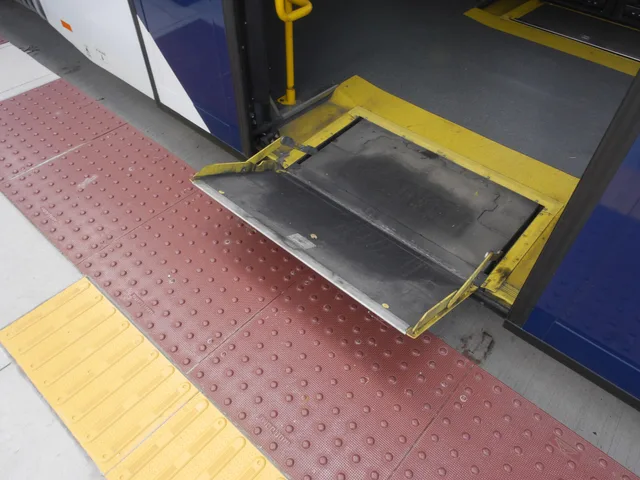
Metrorail in Washington, D.C. has elevators at stations, but elevator outages happen. Check the status the morning you travel and have a bus or taxi fallback. Boston's subway is older and its stations vary widely, so treat each stop as a separate question.
Metro publishes an elevator and escalator status page, and Smithsonian station on the Blue, Orange and Silver lines is the stop for the Mall's south side. Government Center, Park Street, Haymarket and North Station sit closest to the Freedom Trail, and the MBTA posts elevator and escalator status for each one.
The U.S. Access Board publishes PROWAG guidelines for sidewalks and transit stops. It is the reference for curb ramps, detectable warnings and the clear space at a bus stop or platform edge.
Ask your hotel how far the nearest accessible transit stop is, in feet, and whether the path to it has curb cuts on both sides. Ask whether the stop has a pad and a clear landing area.
For intercity legs, Amtrak Accessibility covers boarding assistance, but you must request it in advance at the station you use. Air travelers can request screening help through TSA Cares.
If you use paratransit or a ride service, ask about the vehicle type and the pickup point. A hotel entrance on a one-way street can add a block to the pickup.
Write the transit plan down before you book the hotel. The hotel that looks closest on a map is not always the one with the shortest accessible path.
Question three: what surface will you cross, and who maintains it?
Surfaces decide comfort. Brick, cobblestone, granite setts and packed gravel transmit vibration that a smooth concrete path does not. The third booking question is what you will roll on, and who fixes it.
Ask who maintains the specific stretch you will use. On federal land in Washington, D.C., that is often the National Park Service. On a Boston street, it may be the city, the state or a private owner, and the answer changes who you call about a broken slab.
PROWAG covers sidewalk and pedestrian route design, including cross slope and surface conditions. A path can meet width rules and still fail on cross slope, which pushes a wheelchair toward the street. The 2010 ADA Standards cap cross slope on an accessible route at 1:48, about 2 percent, in section 403.3.
Ask about cross slope on any long outdoor route, and about drainage grates, tree roots and utility plates. Those are the obstacles that stop a trip.
If your route crosses a historic district, expect preservation rules to limit how fast a surface is repaired or replaced. That is not an excuse, but it is a fact worth planning around.
Start with DC 311 for a city sidewalk in Washington, D.C. and the National Park Service's National Mall and Memorial Parks office for federal land. In Boston, start with Boston 311, and call the MBTA about a station problem.
Washington, D.C.: monuments, museums and the National Mall
The National Mall is the easiest major sightseeing route in the country for many wheelchair users: wide, mostly paved and largely flat. That does not make it uniform. Distances between monuments are long, and shade is scarce in summer.
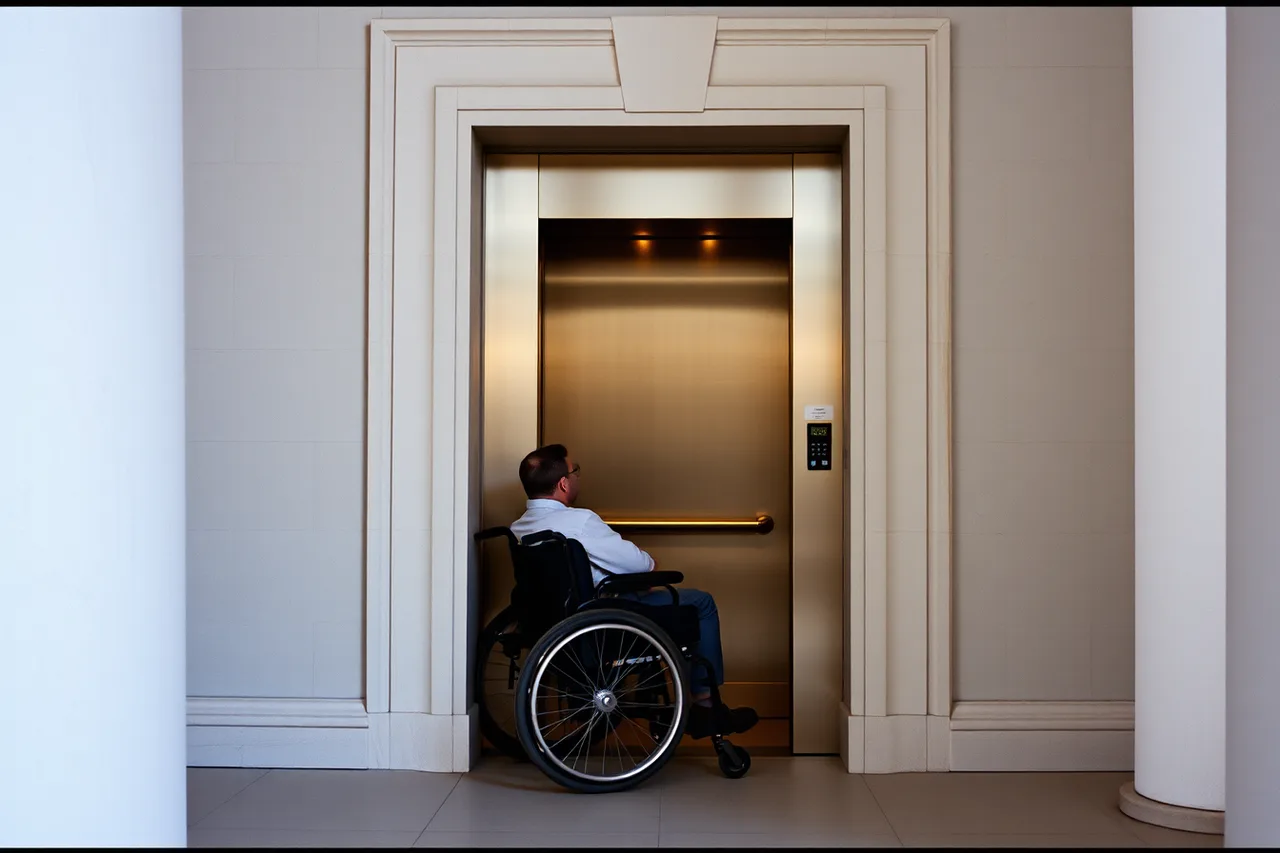
Because the monuments and the Smithsonian museums are federal facilities, the ABA Standards for federal facilities apply to them, in addition to the ADA. That gives you a second standard to cite when you ask about a ramp, a lift or an accessible restroom.
The Lincoln Memorial has an elevator to the chamber level, and it goes out of service. Ask about the elevator status before you build a day around it. The Jefferson Memorial, the Washington Monument and the Franklin Delano Roosevelt Memorial each have their own arrangements, so treat them as separate trips.
The U.S. Capitol Visitor Center is the accessible entrance to the Capitol; it sits underground on the east front, and tours are booked through it. The Washington Monument uses an elevator to the observation level, so confirm that elevator before you commit to the day.
Accessible museums Washington DC travelers rely on include the Smithsonian sites, which do not charge admission. Ask about entrance locations, because several museums route wheelchair users to a specific door.
Metrobus routes serve the Mall, but stops and curb conditions vary. Ask which access details to check for each site before you commit a day to it.
Plan the Mall in short segments with rest points. A single loop of the Tidal Basin and the memorials is a long push on a hot day.
Boston: Freedom Trail surface, curb cuts and transit access
Boston Freedom Trail accessibility is the hard part of any Boston plan. The 2.5-mile red line crosses brick, cobblestone and granite, and some stretches near Faneuil Hall and the North End are rough and uneven.
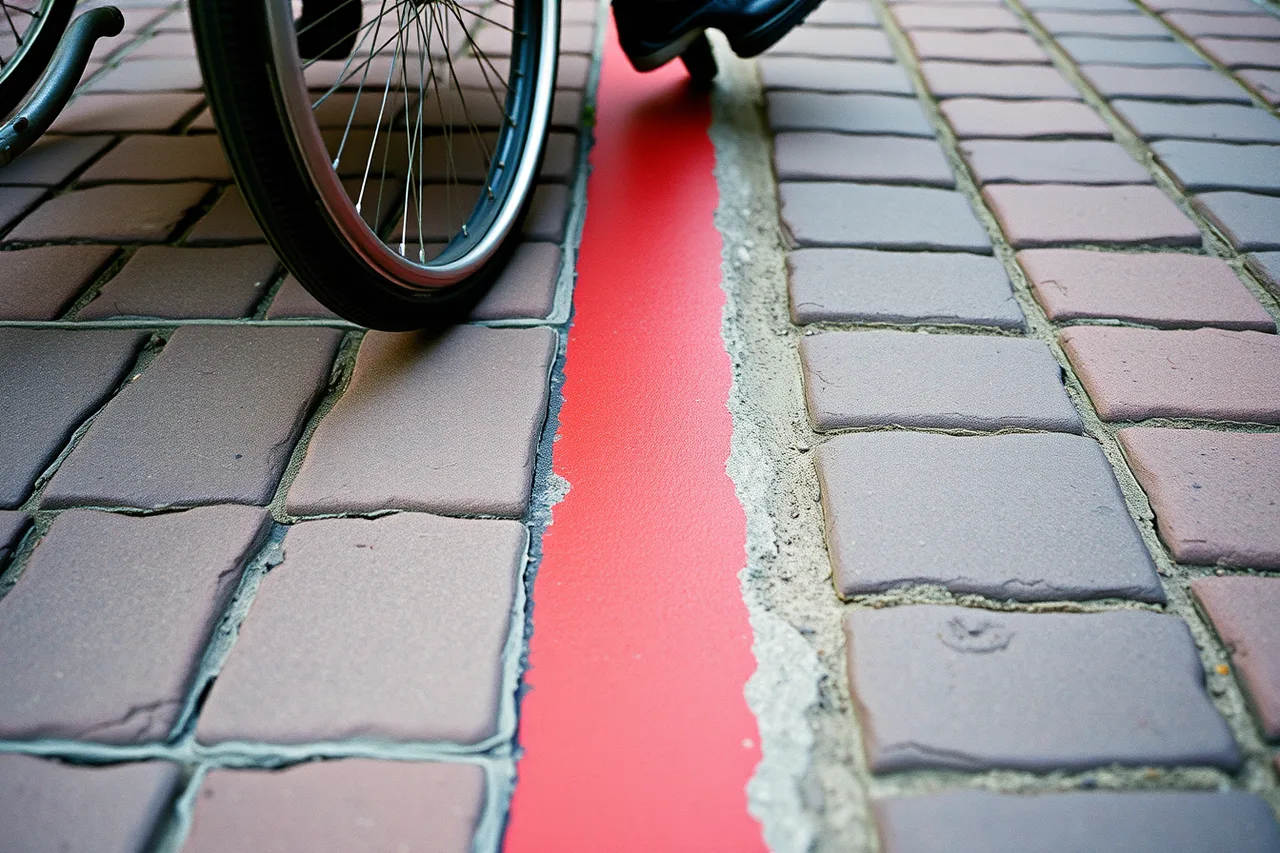
The stretch from Boston Common to Faneuil Hall is roughly 0.7 mile, and its brick cross slopes are worth measuring against the 1:48 cap in section 403.3.
The Trail is a painted line, not a managed path. No single body maintains its whole length, so surface quality changes block by block. Ask about the specific segments you want, not the Trail as a whole.
The Freedom Trail Foundation runs accessible tours, and several historic sites along the route have lifts or ramps. The Paul Revere House and the Old State House are small historic buildings, so ask about door widths and floor changes before you go.
Boston transit access is uneven because the system is old. Some stations have elevators to every platform, others do not. Check each station on your route individually, and check the elevator status on the day.
Curb cuts in the historic districts are not uniform either. Some corners have ramps, some have none, and some are blocked by construction or parked vehicles. Ask your hotel which corners on your route have cuts.
If the Trail's surface is too rough for your chair, use Tremont Street to Congress Street, standard sidewalks that run parallel to the painted line between Boston Common and Faneuil Hall. The Freedom Trail Foundation publishes an accessibility page, and the Mayor's Commission for Persons with Disabilities answers route questions.
Putting the three questions to work before you book
Run the same sequence for every trip, in this order.
Booking Sequence for Accessible Trips
- Pick sites and list specific entrance and route
- Ask for measured clearances at tight points
- Ask how to reach each site by transit
- Ask about surface and maintenance contact
- Get everything in writing before deposit
- Re-check elevator and construction status week of travel
Use this checklist when you write to a hotel, a tour operator or a museum.
Question one, clearances
- Clear width at the main entrance and at the room door (section 404.2.3)
- Turning space inside the room and bathroom (section 304.3.1)
- Clearance beside the bed on the transfer side
- Roll-in shower with a seat and a grab bar, or a tub with a transfer bench
Question two, transit
- Nearest accessible transit stop, distance in feet, and curb cuts on the path
- Elevator status at the station and at the site, checked on the day
Question three, surface
- Surface type and cross slope on the outdoor route (section 403.3)
- Who maintains that stretch, and the phone number to call
Two of these questions, clearances and transit, are the ones people skip. That is why people forget two questions before booking an accessible trip, and then discover the problem at the door.
Budget follows the same logic. Hotel choice, taxi use and tour costs all shift once you know the real route, which is how booking questions decide an accessible travel budget more than nightly rates do.
Cost and timing move with the route, and neither prices out from a website. Accessible rooms sit in shorter supply, so the same trip usually costs more than the standard version, and the gap widens at short notice. Accessible taxis also carry fewer vehicles per hour, which usually shows up as a longer wait.
The America the Beautiful Access Pass, free to U.S. citizens and permanent residents with a permanent disability, waives entrance fees where a federal site charges one. On the Mall, most sites charge nothing at all.
Timing is the other half. Free timed tickets at the Washington Monument and the U.S. Capitol have to be booked ahead, often weeks ahead in summer, and every elevator outage adds a bus or taxi leg to the day.
Confirming an accessible U.S. hotel room before you travel means asking for the room number, not the room category.