Guides
Part of The seven links in accessible attraction planning and the questions to ask
A packing list for an accessible attraction visit
Pack for waiting outdoors, for long routes with no seating, and for the chance that the accessible restroom sits at the far side of the site.
What to take away
- Waiting is the part of an attraction day that happens outdoors, at shuttle stops and drop-off points, so treat weather as a packing problem rather than a forecast problem.
- A folding stool or seat cane is the single item that changes the day for anyone who walks short distances but cannot stand in a queue.
- If you rely on a vibrating or strobe alert, bring your own. Venues build alarms for buildings, not for visitors, and portable units are rare.
- Everything you carry has to be manageable alone, because the moment you need help is not the moment you can find it.
- Check the site map for the accessible restroom and the shuttle stops before you leave the car park, not when you need either.
What the day actually asks of a bag
Attraction routes are long, seating between buildings is scarce, and the accessible restroom is often across the site from where you are standing. Pack for the gaps, not for the exhibits.
The waiting kit
Water, sun protection, a hat, and a layer for shade. The clock runs at shuttle stops and drop-off points, and those are outdoors.
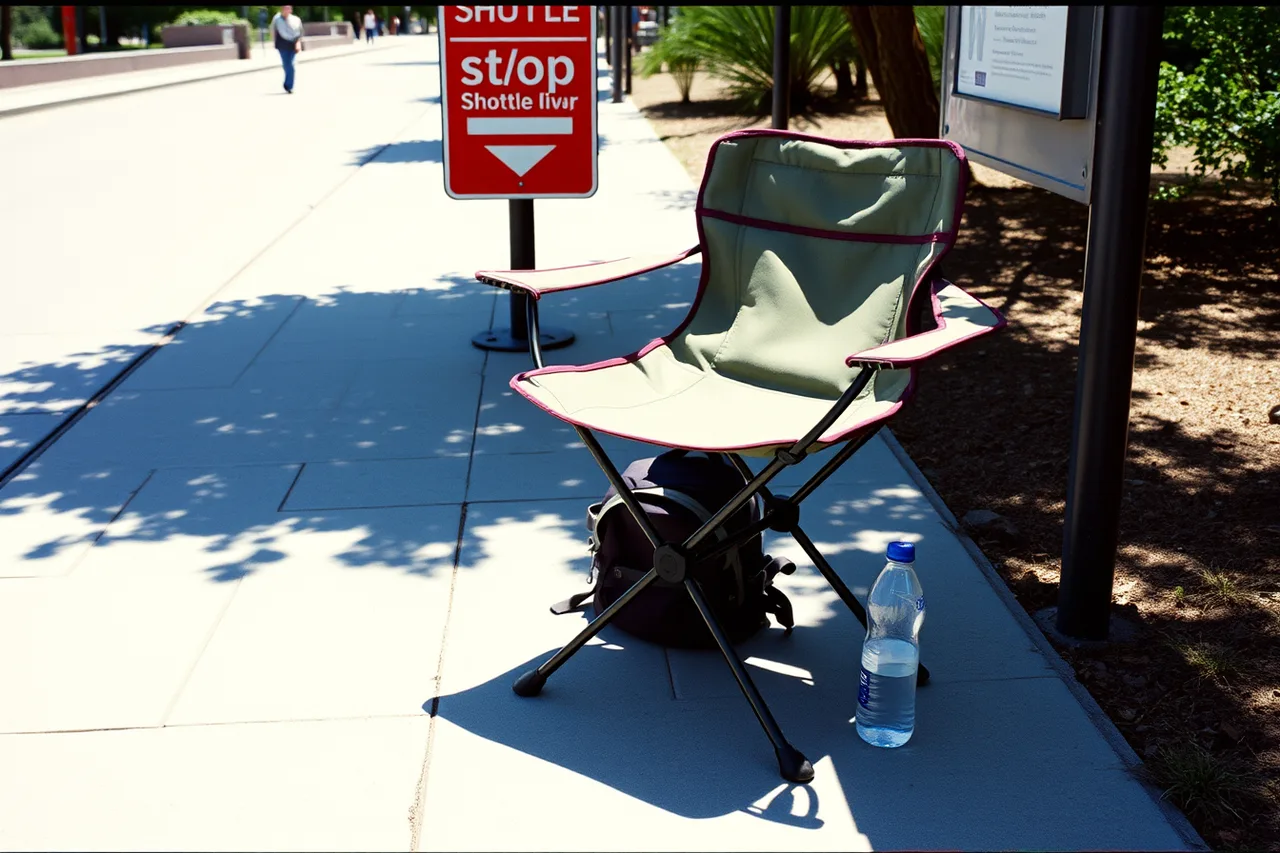
Add something to sit on. A folding stool or seat cane costs little and solves the queue that has no bench at the end of it.
Alerting equipment
Anyone who relies on visual or vibrating alerts should carry their own device. The United States Fire Administration's guidance on smoke alarms sets out the alarm types, including strobe and vibrating models, which is the category to look at for a personal kit.
Then ask the venue one question: what is the evacuation procedure for a visitor who will not hear an audible alarm? A venue that has an answer has thought about it.
Water-based and outdoor sites
Rivers, lakes and coasts change the list. Waterproof covers for equipment, a change of clothes, and footwear that grips a wet boardwalk.
Ozark National Scenic Riverways shows the pattern. Its accessibility pages map facilities along a long water corridor, which is exactly the layout where a missed detail costs an hour.
The list
- Water, more than you think you need
- Sun protection and a hat
- A folding seat, if standing is the constraint
- The whole day's medication, carried on you
- Charger and power bank
- Your own alerting device, where you use one
- A small tape measure, for settling questions about doorways and thresholds
- Cash, for small sites with no card machine
- Any pass or documentation you might be asked to show
What stays in the car
Anything heavy. Anything you would mind losing. A second bag.
The test is simple: can you manage what you carry, alone, through every part of the day? Deciding which bag is which at home removes most of the improvising later.
The document pocket
Four things should be reachable without unpacking the bag: any access pass, the confirmation for a timed entry, a card listing your equipment details, and an emergency contact.
Staff ask for the first two at gates. The second two matter only if the day goes wrong, which is the worst time to be searching a queue. A zipped outer pocket is enough.
Before you leave the car park
Find the accessible restroom on the site map, and find the shuttle stops. Both are usually marked, and both are easier to locate now than in the middle of needing them.
The process behind the day is in how attraction planning works. The seasonal question decides half of what goes in the bag before you pack anything.
Common questions
Is a folding seat worth carrying?
For anyone who can walk a short distance but cannot stand still, it changes the shape of the day. It also weighs less than the alternative, which is leaving early.
Do venues lend wheelchairs?
Many do, at no charge, in limited numbers, and usually without a booking option. Ask at the entrance early rather than at the point you need one.
What about medication in the heat?
Some medication is heat sensitive. Carry it in an insulated pouch and check the storage guidance that came with the prescription, or ask a pharmacist.
How much water for a full day outdoors?
Two liters per person is a working minimum in warm weather. Refill wherever a fountain or a counter will let you, and do not plan to buy it on site.