Guides
Cross-border accessible travel between the U.S. and Canada explained
Wheelchair-accessible travel between the United States and Canada runs on two laws, two border rule sets, and two separate rail and airline regimes.
What to take away
- Wheelchair-accessible travel across the United States and Canada border means two legal systems at once: the Americans with Disabilities Act on U.S. soil and the Accessible Canada Act on Canadian soil.
- Neither law follows you across the border. A train, plane or bus is covered by the rules of the country it is operating in, and sometimes by both on a single trip.
- Border officers on both sides ask about your mobility device and your service animal, not about your disability status. Paperwork is about the animal and the equipment.
- Amtrak's own accessibility rules apply on the U.S. side of a cross-border train. VIA Rail's apply once the train is in Canada.
- Airlines flying between the two countries follow U.S. Department of Transportation rules for flights touching the U.S., plus Canadian rules on the Canadian leg.
- Book accessible space early, carry your device instructions, and keep service animal documentation in your hand luggage.
How the ADA and the Accessible Canada Act differ in what they cover
The Americans with Disabilities Act is a civil rights law. It bars discrimination on the basis of disability in employment, state and local government services, public accommodations, transportation and telecommunications. It has been in force since 1990 and it is enforced through the courts and through federal agencies, including the Department of Justice.
For a traveler, the practical part is Title II and Title III. Title II covers public entities, which includes public transit systems and Amtrak as a public service. Title III covers places of public accommodation: hotels, restaurants, museums, stadiums, shops, doctors' offices and private transportation.
The Act sets a floor, not a ceiling. A hotel must remove barriers where it is readily achievable, provide auxiliary aids, and modify policies when needed. It does not have to rebuild itself. That distinction explains why access across the United States is uneven rather than absent, a pattern covered in Accessible U.S. travel.
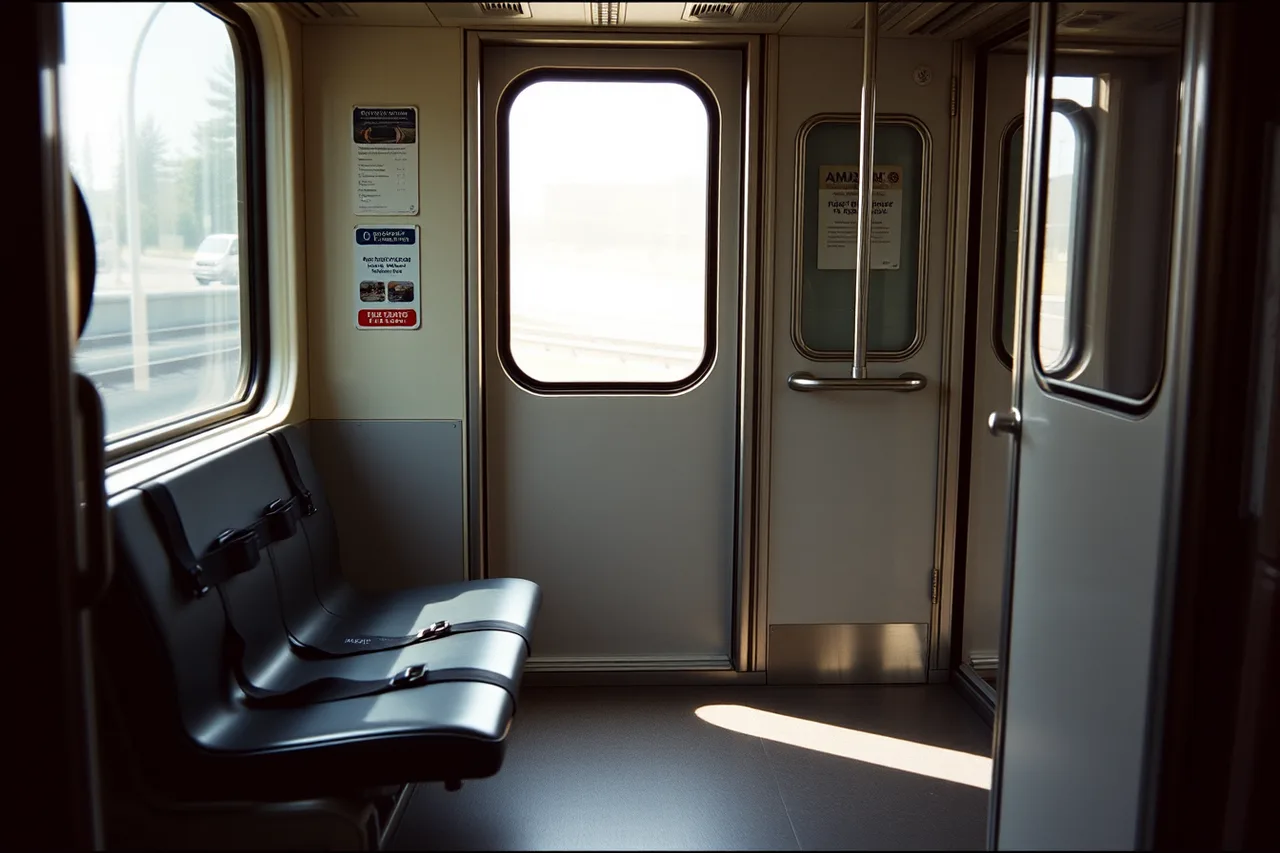
Rail cars and buses are covered by specific design rules. The U.S. Access Board publishes the ADA Accessibility Guidelines for transportation vehicles, which set door widths, floor heights, securement positions and lift specifications for new and remanufactured rail and bus vehicles.
Those standards are the reason a modern Amtrak car has a wheelchair space with a tie-down and a call button.
The Accessible Canada Act took effect in 2019. It applies to federally regulated sectors: banking, telecommunications, broadcasting, air, rail, marine and interprovincial bus travel. It does not cover restaurants, shops or hotels, which fall mostly under provincial human rights codes and provincial accessibility laws.
That is the biggest structural difference. The ADA reaches deep into everyday places. The Accessible Canada Act reaches the federally regulated travel chain, and provinces pick up the rest. Ontario, Manitoba, Nova Scotia and British Columbia have their own accessibility legislation at different stages of maturity.
Both laws aim at the same outcome: barrier-free travel. They differ in who is covered and who enforces. A complaint about a U.S. hotel goes to the Department of Justice or a private lawsuit. A complaint about a Canadian airline goes to the Canadian Transportation Agency. A complaint about a Canadian hotel goes to a provincial human rights tribunal.
For planning, the practical consequence is that you should not assume a rule you know from home applies on the other side. Ask specific questions about the door width, the lift, the accessible room and the securement, and ask the operator, not the booking site.
Documentation and questions at the U.S.-Canada border for disabled travelers
Border documentation requirements for disabled travelers are the same as for anyone else: a valid passport, or an enhanced driver's license or NEXUS card where accepted. Disability does not change the documents you need to enter either the United States or Canada.
What changes is what officers may ask, and what you should carry. U.S. Customs and Border Protection and the Canada Border Services Agency both care about the device you are bringing and the animal traveling with you, because those items have import and health rules attached.
A wheelchair or scooter you use personally is generally treated as personal effects, not as a commercial import. If it is brand new, unusually expensive, or being carried for someone else, expect questions. A repair receipt or purchase invoice settles most of them.
The U.S. Department of Transportation publishes guidance on air travel with disabilities that covers the airport and airline side of the crossing, including assistance to and from the gate and the handling of mobility aids. That page, Disability | US Department of Transportation, is worth reading before any flight that touches the United States.
For general trip planning on the U.S. side, Travel | USAGov collects the basics on passports, border wait times, travel advisories and what to declare. Start there if you are unsure which agency owns a question.
At the booth, keep answers short and factual. You are traveling for tourism, visiting family or attending a conference. You are carrying a wheelchair, a spare battery and a service animal. You have documentation for the animal if asked.
A few practical habits help:
Documentation and questions
- Keep passports, NEXUS cards and any animal paperwork in one pouch you can reach from the driver's seat or the aircraft seat.
- Carry the device manual or a one-page sheet listing battery type, dimensions and weight.
- Carry a letter from your clinician only if a carrier has asked for one. Officers do not require a diagnosis letter for you to cross.
- Declare the device and the animal when asked. Volunteering the information is faster than being questioned about it.
- If you use a NEXUS card, confirm your device fits the lane and the booth layout, since some crossings have tighter geometry than others.
Land crossings between Washington and British Columbia, or New York and Ontario, are usually quick for a traveler in a vehicle. Pedestrian and cyclist crossings exist at some ports, and their accessibility varies. If you are crossing on foot with a wheelchair, call the port ahead.
Amtrak cross-border routes and how accessibility rules change
Amtrak operates cross-border service on a small number of routes. The best known is the Maple Leaf, which runs between New York City and Toronto via Albany, Syracuse and Buffalo, with the border stop at Niagara Falls, Ontario. Amtrak crews hand over to VIA Rail crews at the border.
Other cross-border rail options are limited. The Adirondack between New York City and Montreal has run seasonally, and the Cascades service connects Seattle and Vancouver, though that corridor has been served by bus at times. Always check the current timetable before you build a trip around a train.
On the U.S. side, Amtrak's accessibility rules apply. Every Amtrak train that carries passengers has at least one wheelchair space with a tie-down, and staff can assist with boarding and detraining at staffed stations. Amtrak asks for 24 hours' notice for assistance and for a space reservation on routes where spaces are limited.
The design of those spaces traces back to the ADA Accessibility Guidelines for transportation vehicles, which the U.S. Access Board maintains and publishes as ADAAG for Transportation Vehicles. The guidelines cover wheelchair spaces, securement systems, door and aisle clearances and onboard communication.
They are the reason you can expect a defined space rather than a folding seat.
Once the train crosses into Canada, the Accessible Canada Act and VIA Rail's own policies govern. VIA Rail publishes its accessible travel policies and asks for advance notice for assistance, typically 48 hours for some services. Its fleet includes accessible spaces and accessible washrooms on many trains, but not all car types are identical.
That handover is the part travelers miss. You may book one ticket, but you are dealing with two operators, two assistance desks and two sets of notice periods. If your needs change, tell both.
Station accessibility also differs. Buffalo, Albany and New York Penn are large staffed stations with elevators and accessible platforms. Smaller stops on the route may have low platforms, no elevator or no staff. Check the specific station, not the route.
If your cross-border plan includes water instead of rail, the same two-regime logic applies to ferries, and the booking lead times differ again. The BC Ferries Wheelchair Access guide covers what to reserve in advance on the Canadian side.
Airline accessibility on cross-border flights versus domestic U.S. flights
On any flight to, from or within the United States, U.S. Department of Transportation rules for air travel with disabilities apply. That includes cross-border flights operated by Canadian carriers, because the flight touches the United States. The DOT's disability page sets out the core protections.
Those protections include the right to fly with a mobility device, prompt return of the device at the gate, assistance boarding and deplaning, and access to a complaint process with a response deadline.
A domestic U.S. flight is simpler. One regulator, one set of rules, one complaint route. A cross-border flight is not. The U.S. rules apply for the portion touching the United States, and Canadian rules, including the Accessible Transportation for Persons with Disabilities Regulations, apply on the Canadian side.
In practice, that means a flight from Toronto to Chicago is covered by both regimes at different points. The Canadian carrier must meet Canadian requirements for the Canadian segment and U.S. requirements for the U.S. segment. Most major carriers design to the stricter of the two.
Where differences show up:
Airline accessibility cross-border
Domestic U.S. flight
- Primary rule set
- U.S. DOT disability rules
- Complaint route
- U.S. DOT
- Mobility device stowage
- Cabin where aircraft permits
- Advance notice for assistance
- Recommended, often 48 hours
- Service animal rules
- U.S. DOT rules for service animals
Cross-border flight
- Primary rule set
- U.S. DOT rules plus Canadian regulations
- Complaint route
- U.S. DOT or Canadian Transportation Agency
- Mobility device stowage
- Same, plus carrier policy differences
- Advance notice for assistance
- Recommended, and some carriers ask 48 to 72 hours
- Service animal rules
- U.S. rules on U.S. legs, Canadian rules on Canadian legs
One real difference is the treatment of service animals. U.S. rules recognize dogs trained to do work or perform tasks for a person with a disability. Canadian air rules are similar in intent but the paperwork and the carrier forms are separate, and some carriers ask for documentation in advance.
Another difference is the complaint clock. U.S. rules require airlines to acknowledge a disability complaint within 30 days and respond substantively within 45 days. Canadian rules have their own timelines. If a problem happens at a connecting point, it can be unclear which regulator owns it, so file with both.
Batteries are a shared headache. Lithium-ion batteries in mobility devices are regulated as dangerous goods, and the rules differ by battery type, size and whether the battery is removable. Ask the airline in writing, and carry the manufacturer's specification sheet.
Mobility devices and service animals across the border
Your mobility device is the piece of equipment most likely to cause a delay, not because of disability law but because of transport and customs rules. Airlines and rail operators have weight and dimension limits for checked and gate-checked devices, and those limits are set by the carrier, not by the ADA or the Accessible Canada Act.
Measure your device before you book. Know its width, length, height, weight and battery type. A folding manual chair and a heavy power chair create very different problems, and the difference is usually handled at the gate rather than at the ticket counter.
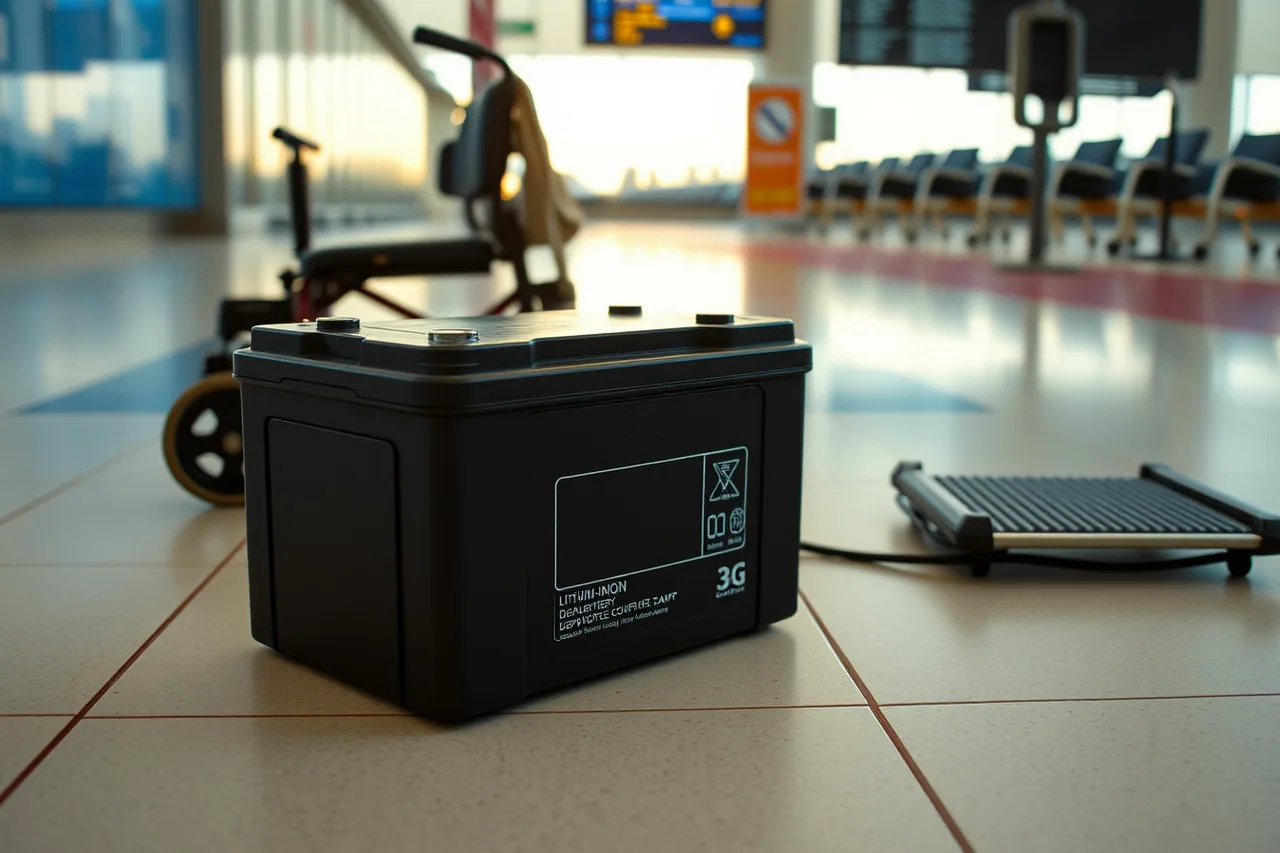
For power chairs, the battery question dominates. Dry cell, gel cell and lithium-ion batteries each have different handling rules. Removable lithium batteries often must be carried in the cabin, protected from short circuit, and declared at check-in. Confirm the carrier's policy in writing before departure day.
If you rent a device at your destination instead of traveling with one, confirm the rental company's delivery point and its hours. Airport and station deliveries can fail when a flight is delayed, so build in a buffer.
Service animals are covered by different rules depending on where you are. In the United States, the ADA service animal rules apply to hotels, parks, transit and other public accommodations, as set out on Service Animals | ADA.gov.
A service animal is a dog trained to do work or perform tasks for a person with a disability. Emotional support animals are not service animals under the ADA.
That distinction matters at the border and at the hotel desk. Under the ADA, staff may ask only two questions: whether the dog is required because of a disability, and what work or task the dog has been trained to perform. They may not ask for documentation or demand a demonstration.
The Frequently Asked Questions about Service Animals and the ADA | ADA.gov covers common situations, including hotels, restaurants, taxis and venues, and it is the clearest single reference for what a U.S. business may and may not ask. Read it before a trip if you travel with a dog.
In Canada, provincial human rights codes and the Accessible Canada Act handle service animals in federally regulated travel. Documentation expectations are set by the operator. For air travel, carriers may require advance notice and, in some cases, a form confirming the animal's training.
At the border itself, the animal is an animal. Both the United States and Canada have health and agriculture rules for dogs entering, including age and rabies vaccination requirements. Carry the vaccination certificate. It is asked for more often than any disability document.
If your cross-border trip includes a winter stop, note that resort access varies widely and is worth checking operator by operator. The comparison of Wheelchair-Accessible Ski Resorts in British Columbia shows how much the details differ between mountains.
Planning a cross-border accessible trip: what to book and what to carry
Cross-border accessible trips reward early booking more than domestic ones, because two sets of assistance desks, two notice periods and two rule sets are involved. Start with the transport, then the accommodation, then the activities.
Decide the mode first. Flying is faster and has the strongest legal protections for mobility devices, but it concentrates risk at the gate. Driving gives you control of your own equipment and your own schedule, and border crossings by car are usually straightforward. The trade-offs are set out in Driving versus flying.
Once the mode is fixed, work backwards from the date. A realistic sequence:
- Confirm passports, NEXUS cards and any animal health certificates are valid for the travel window.
- Book transport with an accessible space, and request assistance at the same time you book, not later.
- Book accommodation and ask specific questions: door width, roll-in shower, bed height, elevator, and whether the accessible room is held until check-in.
- Book any accessible activity or tour separately, since these often have their own notice periods.
- Reconfirm every assistance request 48 to 72 hours before departure, in writing.
- Carry printed confirmations, device specifications, battery documentation and animal vaccination records.
The checklist to carry:
- Passport or accepted border document for each traveler
- Transport confirmation showing the accessible space and the assistance request
- Device specification sheet with dimensions, weight and battery type
- Airline or rail carrier's written policy on your specific device
- Service animal vaccination certificate and any carrier form
- Accommodation confirmation naming the accessible room features
- Contact numbers for both operators if the trip crosses a handover point
A worked example shows how the pieces fit. A traveler in a power chair flies from Seattle to Vancouver, stays three nights, then takes a bus back to Seattle. The flight is cross-border, so U.S. DOT rules apply to the U.S. portions and Canadian rules apply on the Canadian side.
The chair has a removable lithium battery, so it must be declared and the battery carried in the cabin.
The hotel is asked in advance about door width and a roll-in shower, and confirms both in writing. The return bus is an interprovincial service, so the Accessible Canada Act applies while it is in Canada, and U.S. rules apply once it crosses. The traveler reconfirms assistance with both carriers 72 hours out and carries printed confirmations.
That is the whole method. Two legal systems, two operators, one trip, and a folder of paper that answers the questions before they are asked. Travelers who plan a wheelchair accessible trip this way spend their energy on the destination rather than on the border.
The staged approach in planning a wheelchair accessible trip breaks the same work into a nine-week countdown.