Guides
Accessible U.S. travel: why access is uneven, not absent
Accessible U.S. travel varies by city and venue, so travelers should verify elevator status, route surfaces, and transit gaps before booking any trip.
What to take away
- "Accessible" on a listing is a word, not a measurement. Ask for door clear width, step count, bathroom dimensions and the surface between parking and entrance.
- A trip crosses two legal regimesprivate businesses under ADA Title III, and state and local government under Title II.
- The last hundred meters, not the room, is where most trips fail. Curb ramps, crossing times, construction detours and gravel forecourts decide the day.
- Accessible rooms and adapted vehicles are limited stock. They go early, so as a typical range book six to twelve weeks ahead, and longer for peak season.
Accessible travel in the United States is better than most visitors expect and less consistent than anyone would like. The law sets a floor. The floor is applied unevenly. The difference between a good trip and a bad one is usually the quality of the questions asked beforehand.
Two regimes, one trip
A single day can cross both halves of the Americans with Disabilities Act without anyone mentioning it.
Hotels, restaurants, attractions and tour operators are private businesses. What they owe you sits under Title III: barrier removal where it is readily achievable, reasonable changes to policies, communication support, and design standards in new construction and alteration.
Transit systems, public parks, municipal car parks, visitor centers and the pavement itself belong to state and local government. The Justice Department's Title II material covers that side: the duty of public entities to make their programs and services usable.
Two consequences follow. Recently built or altered facilities are far more predictable than old ones, which is why the age of a hotel tells you more than its brand does. And when the route is the problem rather than the venue, you are asking a different organization entirely.
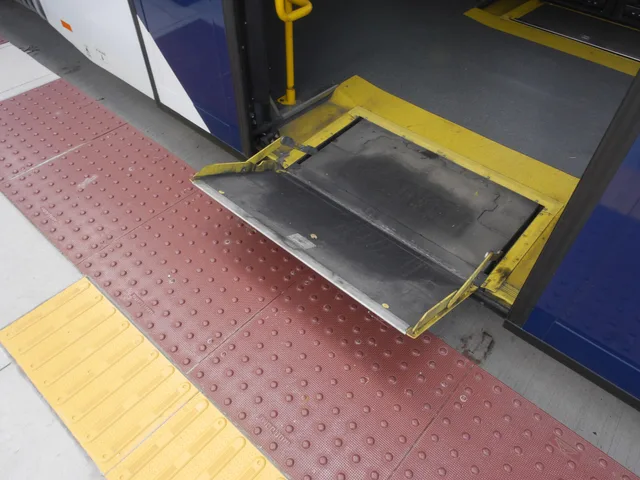
Transit shows the split inside one city. In New York, every bus carries a ramp, while only a minority of subway stations are step-free. In San Francisco, the cable cars are not wheelchair accessible, while the buses are.
Venues differ the same way. The Smithsonian museums in Washington, D.C. publish access details for each building.
Start with the USA.gov disability services directory
The government's own disability services directory maps what exists: benefits, transport programs, state agencies and the offices that take complaints.
It is not a travel guide. It is the index that tells you which agency handles what, which matters when something goes wrong and you need to know who to ask.
The questions that produce numbers
Replace "is it accessible?" with specifics. A property that answers these in one reply is a property that knows its building.
- What is the clear width of the door into the room? The common standard is 32 inches.
- How many steps are there between the drop-off point and the front desk, and is there a ramp?
- What are the bathroom dimensions, and is there a roll-in shower with a seat?
- What is the surface between the accessible parking space and the entrance: asphalt, concrete, gravel or grass?
- What is the slope of any ramp or path on the way to the entrance?
- What clear turning space is there inside the room and inside the bathroom?
Questions That Produce Numbers
- Door clear width, measured open, in inches
- Step count and location, including entrance
- Surfaceasphalt, gravel, grass, brick
- Bathroom dimensions and grab bar position
- Roll-in shower or bath with seat
- Lift working today, not just existing
Ask for photographs. Properties that have them send them immediately, and that response is itself information about how the stay will go.
Budget the last hundred meters
Last Hundred Meters: Map vs Reality
Map Estimate
- Distance
- 300 meters
- Speed
- 60 m/min
- Grade
- Flat
- Curb
- Ramped
- Time
- 5 minutes
Real Surface
- Distance
- 300 meters
- Speed
- 30 m/min gravel
- Grade
- 6 percent
- Curb
- 200 m detour
- Time
- 15 minutes
Budget the last hundred meters of every journey separately from the rest. Check street imagery before assuming a short walk is short, and treat what first-time visitors miss as a checklist rather than a warning.
Build in redundancy
Everything that matters should have a second option: a second accessible room held at another property, a second route into the attraction, a taxi number held in reserve.
This is not pessimism. It is the same planning a pilot does, and it converts a failure into an inconvenience. Redundancy costs a phone call. A blocked route costs the day.
Confirm twice, in writing
Confirm at booking and again the week before. Ask specifically whether anything is under repair, because lifts, ramps and accessible restrooms go out of service without any listing being updated.
The room-level version of these questions is in where to stay near the best accessible routes. The booking questions to send before paying covers what belongs in writing.
Where the rules come from
Building codes are set locally. California and New York run their own amendments on top of the model codes, and a venue that meets one state's standard may not meet another's.
This publication does not interpret codes for a named venue. Confirm measurements with the property, and check the standard with the local building authority that enforces it. The same applies to ADA compliance questions: the U.S. Department of Justice ADA Information Line answers those, and the USA.gov directory above routes complaints.
Common questions
Is the United States good for accessible travel?
Generally yes in new buildings and large attractions, and highly variable in historic districts and small towns. Judge by the age of the building and the quality of the answers you get, not by the brand.
Do I have to disclose a disability to book?
No. Describe what you need rather than naming a condition. "I need a roll-in shower and 32 inches of door clear width" gets you the right room. A diagnosis does not.
What if a business refuses a reasonable request?
Ask for the manager, put the request in writing, and use the complaint route the USA.gov disability services directory points to. For compliance questions, contact the Justice Department's ADA Information Line on 800-514-0301 (TTY 800-514-0383).
How far ahead should I plan?
Six to twelve weeks ahead is a typical range, and longer for peak season. Accessible rooms and adapted vehicles are limited stock and both go early. For device selection, pressure relief or whether a specific condition suits a trip, ask your physician or physical therapist.
In this guide
- Accessible US travel itinerary planning: one anchor a dayAn accessible US travel itinerary can stay flexible: plan one morning anchor, a scheduled rest, a written backup, and fewer transfers each day.
- Accessible US travel tips for checking routesAccessible US travel tips for checking sidewalk approaches, coordinating handoffs, judging distance and grade, and pacing daily stamina before a trip.
- Confirming an accessible U.S. hotel room before you travelConfirming an accessible U.S. hotel room before travel means verifying the specific room, the bathroom setup and the route in writing with the hotel.
- Accessible US Travel Businesses: What to MeasureFor accessible US travel businesses, measured entrances, doors, restrooms, tables and parking give travelers access details instead of a vague label.
- Accessible U.S. travel bookings hinge on written measurements, not promisesWritten measurements beat verbal promises at every accessible U.S. travel check-in desk, so ask providers for door width numbers and bathroom clearances in email.