Industry
Where five real accessible trips nearly went wrong
Five real accessible trips, from Chicago to Yosemite, and the exact points where each itinerary nearly broke before travelers fixed the problems.
What to take away
Five real accessible trips, and where each nearly went wrong: Chicago on the CTA, Amtrak's Coast Starlight from Los Angeles to Seattle, an Interstate 40 drive from Oklahoma City to Flagstaff, Yosemite Valley in October, and a Denver connection.
- In four of the five, the failure point was a handover, not the headline attraction.
- Every fix was arithmeticminutes of slack, number of accessible restrooms, hours between driving legs.
- Verify clearances and opening status with the operator or the local building authority before you book, not after.
Chicago, two days, on the CTA
Two days in the Loop and on the Museum Campus, arriving at Midway Airport on the Orange Line, no taxis. The plan assumed CTA rail would carry the trip. It nearly did not.
The failure point was the elevator, not the train. The CTA lists elevator and escalator outages on its accessibility page and posts alerts to @cta. Outages cluster on weekends, which is when visitors ride.
The fix was a second step-free station within pushing distance of every stop. Roosevelt has elevators to the Red, Orange and Green lines and sits about a mile from the Field Museum, the Shedd Aquarium and the Adler Planetarium. Clark/Lake covers the Loop.
A day built this way turns a dead elevator into twenty minutes instead of an afternoon. This is the same arithmetic behind a two-day itinerary built around accessible travel mistakes: one anchor a day, one fallback for it.
The Coast Starlight, Los Angeles to Seattle
Amtrak's Coast Starlight leaves Los Angeles Union Station daily and reaches Seattle's King Street Station about 35 hours later, with stops at Santa Barbara, San Luis Obispo, Sacramento, Portland and Tacoma. The train was never the problem.
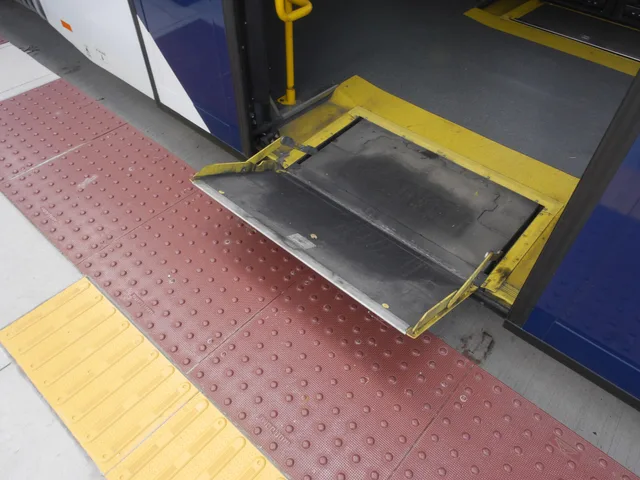
The failure point was the intermediate stop. At an unstaffed platform, an attendant bridges the gap between car and platform with a portable ramp, and the step up into the car is a separate move. Amtrak asks for 24 hours notice for assistance and a lift-equipped station for anyone who cannot use stairs.
Amtrak's station pages state which stops have a ticket office, checked baggage and a wheelchair lift. Portland Union Station and Sacramento are staffed, and several small overnight stops are not.
The fix was to book through to staffed stations only, request assistance at both ends when booking, and arrive early enough that a missed connection stayed survivable. The accessible bedroom on a Superliner sells out first, so the booking window matters as much as the route.
Interstate 40, four days by car
Oklahoma City to Flagstaff on Interstate 40 covers roughly 900 miles, about 13 hours of driving without stops. Spread over four days, that is four legs through Amarillo, Albuquerque and Gallup.
The car carried a scooter, and the older traveler had a balance condition. The failure point was fatigue, not terrain. Long driving days leave a person unsteady at exactly the hour they need to walk into a motel.
The NIDCD's material on balance disorders explains how widely unsteadiness affects adults and how much it varies from day to day.
Love's, Pilot Flying J and TravelCenters of America publish site lists with fuel, food and showers, which makes a mid-leg stop in Amarillo, Albuquerque or Gallup easy to line up in advance.
The fix was two hours of driving at a time, a level well-lit stop instead of the scenic overlook with the gravel path, and no unlit walking after dinner. Motel rooms with roll-in showers were booked ahead by phone, because the booking sites do not distinguish a roll-in from a tub with grab bars.
Yosemite Valley, three days in shoulder season
Three days in Yosemite Valley in October, on pavement, with the Valley Visitor Center as the anchor. The park's accessibility guide lists which trails are paved and which restrooms are accessible. The Lower Yosemite Fall Trail is a paved mile, and the Yosemite Valley Shuttle carries wheelchairs.
The failure point was a single accessible restroom on the route, closed for maintenance. A park that size has long gaps between alternatives, and the gap is measured in driving time, not walking time.
Glacier Point Road and Tioga Road close for the season with the first heavy snow, often in November, and lodging inside the valley books out months ahead. Yosemite Valley Lodge and Curry Village are the two largest in-valley options.
The fix was two sites per day instead of one, and a call to the ranger desk asking which facilities were open that week rather than which existed. Rangers are the only source that knows about a closed loop on the day.
The America the Beautiful Access Pass, available to U.S. citizens with a permanent disability, covers entry at Yosemite and most federal sites.
The Denver connection
A flight with one connection at Denver International Airport and four nights at the destination, a power chair in the hold. The flight was fine. The connection nearly was not.
Denver moves passengers between the terminal and concourses A, B and C on an underground train, so a connection means an elevator ride at each end. United and Southwest run the most flights there, which widens the direct options.
The failure point was the hold and the connection time, in that order. A power chair travels as checked baggage, and the DOT's Air Carrier Access Act rules cover how airlines handle the device and how to file a claim.
The FAA's advice for passengers on flying safely includes counting the rows to the exits in front of and behind your seat, which takes thirty seconds and matters more if you cannot move quickly.
The fix was a direct flight over a cheaper connection, photographs of the chair at the gate, and a phone call to the destination equipment supplier before departure. Ask the airline about the battery as well: spillable batteries may be removed for the flight, and lithium batteries need their terminals protected against shorts.
Flying is one of five ways to get a device to a destination, and the one with the least control.
What the five share
| Trip | Failure point | The fix |
|---|---|---|
| Chicago CTA, Loop and Museum Campus | Elevator outage | Second step-free station per stop |
| Coast Starlight, Los Angeles to Seattle | Unstaffed platform | Staffed stations only |
| Interstate 40, Oklahoma City to Flagstaff | End-of-day fatigue | Two-hour driving legs |
| Yosemite Valley, October | Closed restroom | Two sites per day, ranger desk call |
| Denver connection | Power chair in the hold | Direct flight, gate photos |
One anchor a day with a fallback. A named human contact at each fixed point. Twenty minutes of slack in every handover. A written plan for the single most likely failure.
Using these
Every one of the five is a real route with a documented pinch point, so the method transfers and the destinations are examples. The equipment decisions behind them set most of the constraints above, and the wider planning guide covers the sequence these five assume has already happened.
Common questions
Why do these five keep coming back to handovers?
A handover is the only part of a trip where someone else controls the timing. A train, a plane or a hotel key is a fixed point, and fixed points rarely fail. The twenty minutes between them does.
What should I verify before booking?
Doorway and bathroom clearances, bed height, and whether the accessible room has a roll-in shower or a tub with grab bars. Ask the property for measurements in writing, and confirm opening status with the operator or the local building authority.
Where do I go if something goes wrong?
For air travel, the DOT enforcement office handles damage claims and access complaints. For access complaints about a business or a building, the U.S. Department of Justice ADA Information Line is the starting point. Neither is a substitute for legal advice.
Which of the five suits a first trip?
Chicago. Short legs, dense transit, and an alternative within pushing distance of almost everything. Save the Coast Starlight for a second trip, when you know how you handle a long day in a seat.
In this guide
- Accessible trip: two-day Chicago itinerary with slack and handoversPlan a two-day accessible Chicago trip: Palmer House Hilton, Architecture Cruise, CTA fares, and a 20-minute slack per handover to absorb delays.
- Reading accessible trip reports: six lessonsSix lessons for reading accessible trip case studies: take the method out of someone else's report without inheriting their body, budget or tolerance for risk.