

Guides
What to Check Before Renting a Wheelchair Van in the U.S.
Wheelchair van rental checklist: compare lift type, securement, pickup, and state rules before you book with a major chain or local mobility dealer.
What to take away
- Rent a wheelchair van in the U.S., not the brochureconfirm lift type, securement points, door opening height, and tiedown count before you pay. Typical door opening height is 54 to 56 inches. Confirm at least 4 tiedown points.
- A major chain such as Wheelchair Getaways or MobilityWorks wins on pickup speed; a local independent mobility dealer wins on fitting and staff knowledge.
- State rules differ. Some states, including California and New York, require the rental agreement to list the lift weight capacity or document tiedown training. Ask the branch for the state rental addendum.
- Check the rental agreement for mileage limits, after-hours return, and roadside assistance coverage. Typical daily rates run $100 to $200 with a 100 to 150 mile limit. Extra miles often cost $0.25 to $0.50 each.
What actually differs
The first split is not vehicle size. It is whether the van has a rear-entry or side-entry ramp. Rear-entry vans often fit a standard parking space but require you to enter from behind. Side-entry vans give curbside access but need a wider parking spot and a clear side lane.
Major chains such as Wheelchair Getaways and MobilityWorks tend to run newer rear-entry models with foldout ramps. Local independent mobility dealers keep fewer vans but more often stock side-entry conversions, lowered floors, and hand controls.
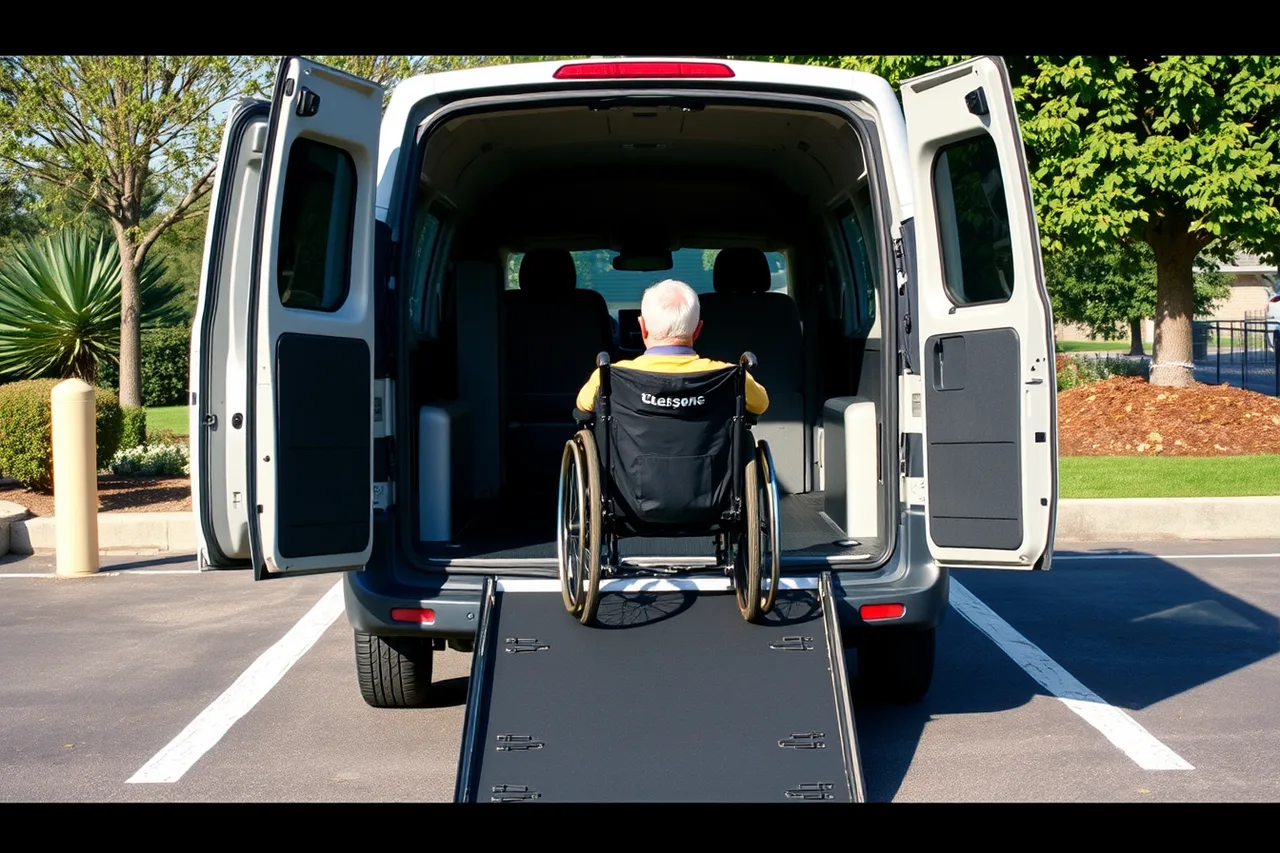
Before comparing features, compare the entry geometry at the places you actually plan to park. A rental van that passes an online photo can still fail at a curb with a missing cutout.
A van that looks right on paper can still block your transfer at the door.
State rental requirements differ, too. Some states require the rental agreement to list the lift's weight capacity, while others leave it to the branch. Ask for the accessible van rental requirements in the state where you will pick up, not only where you live.
Before you call a branch, read access details to check.
The criteria matrix
Major chain
- Entry type
- Rear-entry ramp common
- Fitting help
- Limited; self-serve kiosk
- Vehicle age
- Newer, standardized fleet
- Failure support
- National roadside line
Local mobility dealer
- Entry type
- Side-entry and lowered floor more common
- Fitting help
- Staff measures your chair and demonstrates securement
- Vehicle age
- Mixed age, but often freshly serviced
- Failure support
- Often a local contact who knows the van
The table is not a scoreboard. Use it to filter. If you need a rear-entry van for parking garages, a major chain may be the only workable option in some cities. If your chair is wide or your transfer needs a specific ramp angle, a dealer that spends twenty minutes with you is worth the slower pickup.
Check the floor-to-door opening height with your occupied chair. A van with a 56-inch interior height may still pinch a tall backrest at the door.
Where each one is the right answer
A major chain is the right answer when the trip is short, the route is mostly highway, and you can return the van at a staffed airport or city location. The fleet is standardized, which helps if a breakdown means a replacement van. You still need to call ahead: not every branch stocks a wheelchair van, and the online inventory may be stale.
A local mobility dealer is the right answer when the van must fit your wheelchair, when you need hand controls, or when the trip crosses rough campground roads.
The dealer can check tiedown placement with your chair before you leave. That fitting step is an ADA van rental feature often missing from national chains. See People forget two questions.
Baseline checks every rental van must pass
Every rented wheelchair van should have working tie-downs, a functioning ramp or lift, and a clear path from the chair to the driver or passenger position. The rental agent should show you the emergency release in case the lift loses power.
Check the spare tire, jack, and van-specific tools. Most agreements exclude roof damage and undercarriage scrapes, so inspect the van with the agent and photograph the underside before you leave.
Before you sign, follow the adapted vehicles guidance from NHTSA, which covers securement and crashworthiness features. For trips that include national park drives, the National Park Service accessibility homepage lists scenic drives with clearance and grade notes that matter for a rented van.
Confirm lodging with accessible weekend getaways.
Deciding when a local dealer beats a chain
The close call happens when a national chain has a van available today and a local dealer has the right van but a two-day wait. Weigh the risk of a bad fit against the risk of a lost day.
If your chair has a long wheelbase or you transfer to a captain's seat, do not accept a rear-entry van without measuring the interior turning space. Call the dealer and ask for the door opening height, ramp width, and tiedown count. If the chain cannot give those numbers, the apparent availability is worthless.
In summer, see cooler shoulder season for heat and lift queues.